Shafaq News
Foreign professionals are increasingly working across Iraq’shospitals, factories, engineering firms, and private companies, but many arefinding it difficult to adapt to the country’s language and social norms. Iraqis, too, are struggling to adjust to a more diverse workforce, leavingeveryday interaction between both sides limited.
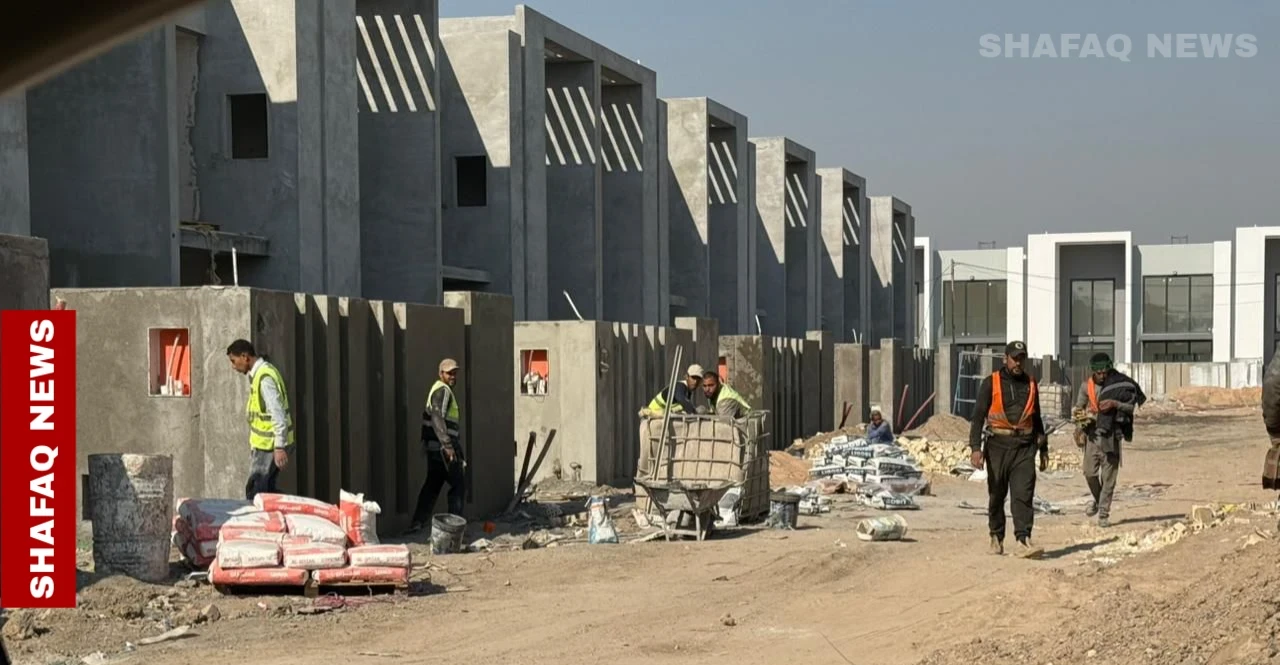
These workers are no longer concentrated in restaurants,cleaning services, and other physically demanding jobs; engineers, technicians,administrators, and healthcare professionals now hold positions in public andprivate institutions, many living in company-operated compounds that providehousing and essential services.
Nawras Hussein, an Iraqi national who lives in a residentialcomplex near one housing expatriate employees, told Shafaq News that mostservices in her compound, including security and fee collection, are providedby foreign staff employed by major Iraqi companies, observing, “It is not onlythe language; sometimes it feels like we’re strangers to them.”
“Even when someone asks for a service or wants to check onsomething, they don’t always deal with us the way we’d expect,” she added,recalling that residents often find it hard to communicate over routinematters.
Baghdad resident Hussein Ali recounted a similar experienceafter requesting electrical work in his apartment. “I told the electricianexactly what I wanted, but he carried on with his own plan … I’d explain itagain, he’d smile, and just keep working.”
: Foreign workers flood Iraq: A threat to local jobs
Foreign workers, however, see those experiences differently.
Several expatriate employees contacted by Shafaq Newsdeclined to speak publicly, fearing media comments could affect theiremployment or residency status. One worker, using the pseudonym “Rahul,” agreedto explain why many expatriates appear reserved.
“We don’t choose to live like this,” Rahul remarked. “Wework long hours, and the company decides where we live and how we get around. There isn’t much chance to meet people.”
He believes many misunderstandings begin before foreignworkers arrive at their jobs, noting that employers explain their duties,accommodation, and transportation, but rarely prepare them for the language,customs, or daily life in Iraq. “When you don’t understand the language, you’realways afraid of making a mistake; sometimes people think we’re ignoring them,but that’s usually not the reason.”
Rejecting the idea that foreign workers intentionallyisolate themselves, Rahul said, “We’re here to earn a living for our families,and nobody came to build a separate community.”
Companies, in his view, should play a bigger role in helpingforeign employees settle into everyday life.
That lack of preparation has become more significant as thecountry’s foreign workforce has expanded. Roughly 47,000 foreign workers werelegally registered in Iraq as of February 2026, according to the Ministry ofLabour and Social Affairs (MOLSA), though the true size of the foreignworkforce is widely believed to be far greater because the country has nocomprehensive count of undocumented labor. In April 2025, Sattar Al-Danbous, arepresentative of Iraq’s General Federation of Trade Unions, estimated theworkforce at more than one million, aligning with the Strategic Center forHuman Rights’ August 2024 assessment that around one million undocumentedmigrant workers —many from India, Bangladesh, Pakistan, Iran, and Syria— wereliving in the country.
Unlike countries with long-established migrant workforces,including the United Arab Emirates, Qatar, and Singapore, Iraq’s labor systemis designed to regulate employment rather than support workers’ integration. Labor Law No. 37 of 2015 sets out rules on work permits, workforce quotas, andemployee protections, leaving language assistance and cultural orientationlargely to employers. Although MOLSA and the International Centre for MigrationPolicy Development (ICMPD) have organized limited orientation initiatives inselected areas, those efforts have yet to develop into a nationwide framework.
Speaking to Shafaq News, Walid Naama Faris, head of theIraqi Federation of Trade Unions, said foreign specialists play an importantrole in filling skill shortages and supporting economic growth, maintainingthat “the problem is not the presence of foreign workers but the limitedinteraction between them and the communities around them.”
Without preparing Iraqi workers to take on those skilledroles, he warned, unemployment among young people, particularly graduates andother qualified workers, could increase over time, reducing opportunities forknowledge transfer, leaving more people feeling that opportunities are notshared fairly, and ultimately affecting social cohesion.
: Iraq tightens labor rules as unemployment tops 1M
Business owner Saif Furat, who employs both Iraqi andforeign engineers, credited expatriate specialists with helping improve hiscompany’s performance and develop its technical capacity. However, he noted,“They’re good at what they do, but they rarely pass their experience on toyoung Iraqi employees as many stay within their own group … and that makescommunication harder.”
Any country hosting large numbers of foreign professionals,social researcher Manahel Al-Saleh argued, needs to create a shared spacebetween them and local communities.
“Living in closed communities prevents both sides fromsharing knowledge and experience,” she said, cautioning that when people remainseparated for long periods, relationships tend to stay limited to work insteadof developing into partnerships that benefit society.
Written and edited by Shafaq News staff.