Shafaq News- Baghdad
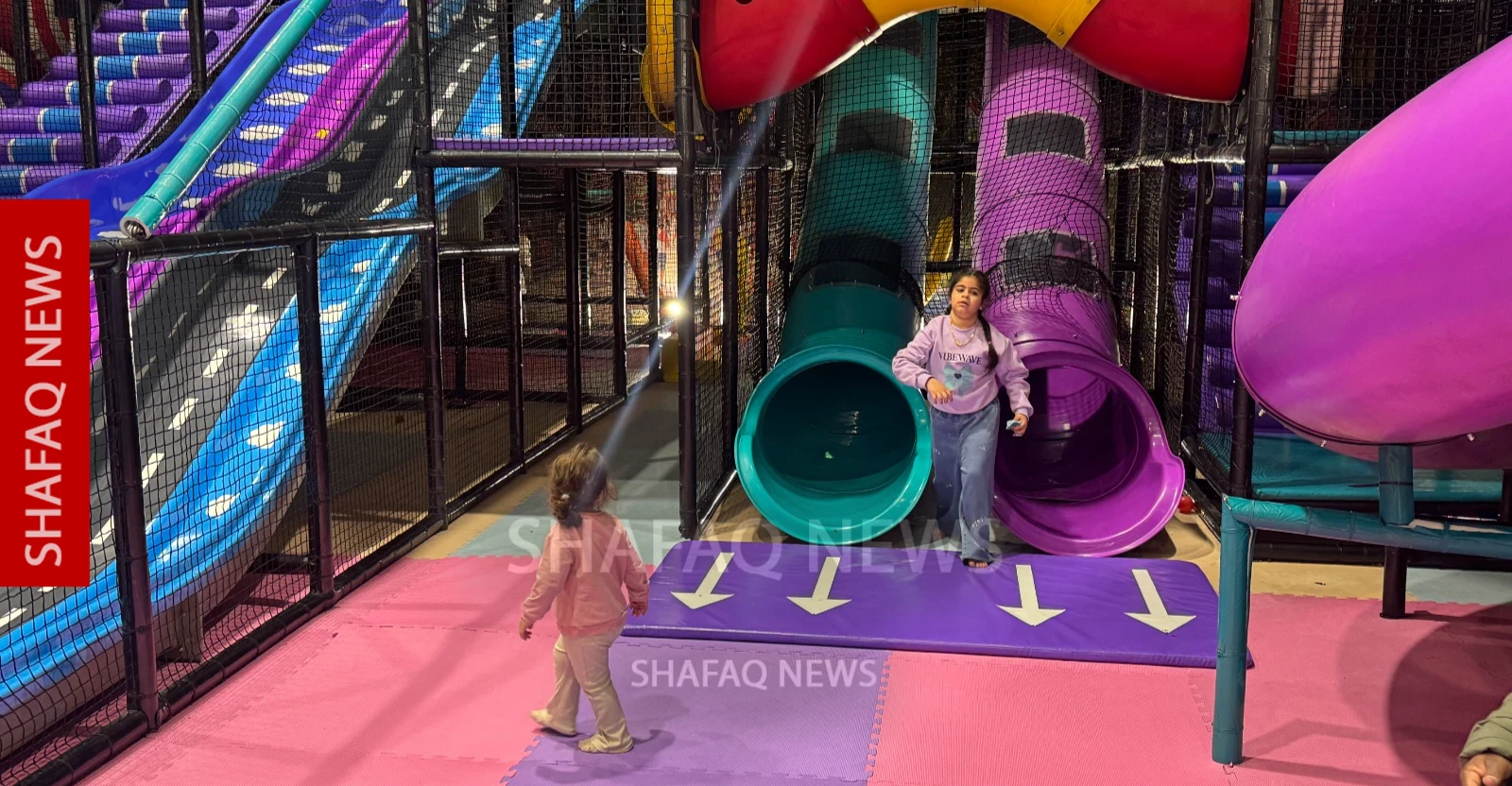
Finding a safe, free place for children to play in Baghdad has becomeincreasingly difficult after the city lost much of its green space and publicrecreational areas while many families can no longer afford privatealternatives.
Wasan Radi, a mother, told Shafaq News on Saturday that she no longerallows her children to play in the street because of traffic risks, whilemunicipal recreational spaces no longer offer a suitable option. "Takingchildren to these places has become pointless because of the many restrictionsthat conflict with a child's natural desire to run and play." Shoppingmalls are not a solution either. They are enclosed spaces, and the cost ofgames is beyond the reach of an average employee, she added.
: Iraq’s Green Belt: The race to forestall desertification
Azhar Mohsen, a father of three children, said taking his children to anamusement park has become a financial burden, noting that loading game cardscan consume a quarter of a monthly salary, while playground equipment in publicparks is often limited or in poor condition.
According to Mariam Al-Fartousi, the head of the Alice Foundation forWomen and Children's Rights, Baghdad has lost much of the shared space thatonce brought families together. Public parks once gave families a place togather for meals while children played freely, but many have since been clearedor converted into commercial and investment projects.
Citizen Nahla Dawood stated that she enrolled her four children in asummer school in Baghdad because she could not find another place for them tospend time, pointing out that the program offers sports, art, educationalactivities, drawing classes, and English lessons, but costs 250,000 Iraqidinars (about $190) per child each month, a fee beyond the means of many Iraqifamilies.
Speaking to Shafaq News, social researcher Manahil Saleh indicated thata child who loses safe spaces to run, play, and interact with peers also losesimportant opportunities to build confidence, develop their personality, andlearn cooperation and teamwork. Additionally, reduced physical activityincreases the risk of social isolation and excessive reliance on smartphonesand electronic devices.
With few affordable choices, many children now spend long hours onsmartphones, tablets, and video games, a trend specialists warn could harmtheir health, particularly their eyesight, physical activity, and socialdevelopment.
: How Iraq’s digital safety fails the ‘Online Generation’