Shafaq News-Baghdad
Iraq needsaround five million additional homes, yet two decades of housing strategieshave failed to narrow the shortage. The latest government initiative, a plan todistribute one million residential plots, promises a new start. Still, expertsinterviewed by Shafaq News say previous failures point to a deeper problem:institutions capable of enforcing land laws, financing affordable housing, andprotecting projects from political interference never kept pace with the plansthemselves.
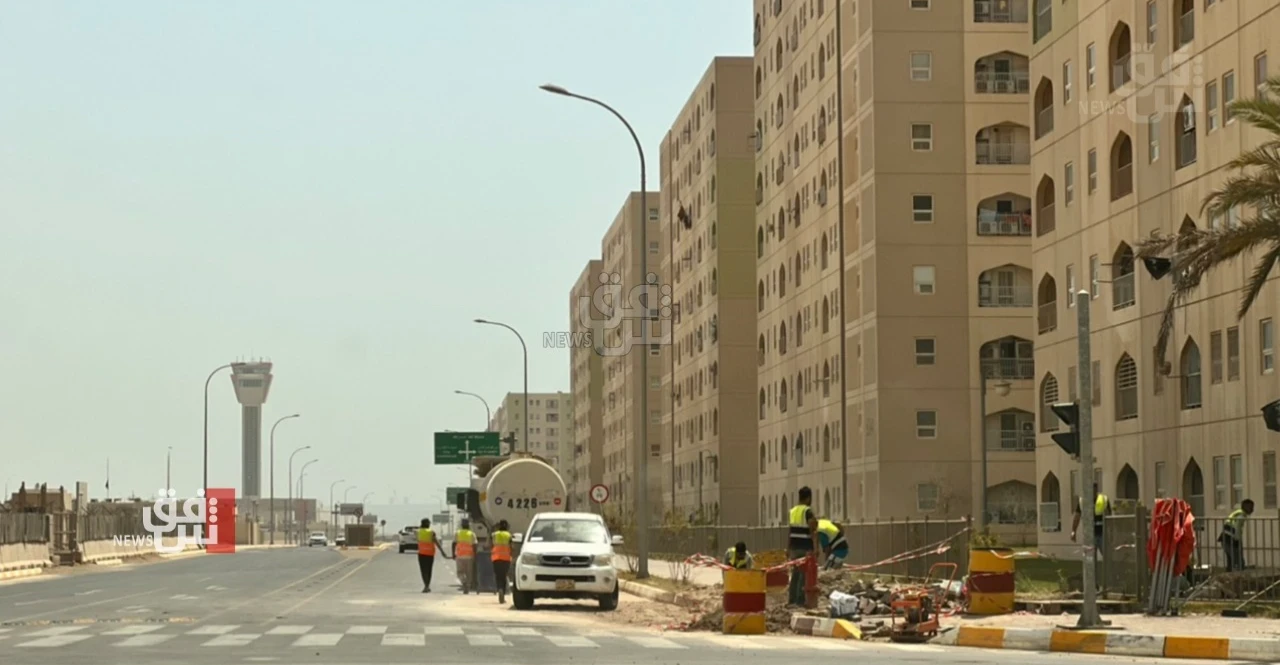
The scale of theshortfall is not disputed. By the estimate of the Ministry of Construction,Housing and Municipalities, some four million people live in informalsettlements mainly in Baghdad, neighborhoods built outside city planning andproperty law, cut off from the schooling, sewage, and electricity that legalresidency confers. A population that has passed 46 million adds hundreds ofthousands of new households a year. What has consistently failed to keep paceis the state's capacity to deliver.
Prime MinisterAli al-Zaidi's "one-million residential land plot" initiative —ascheme to distribute plots nationwide and let citizens build on them— is themost ambitious housing answer Baghdad has offered in years. In July, as theplan moved toward rollout, the National Investment Commission, the federal bodythat licenses private capital projects, suspended approvals for newresidential-investment projects pending a review, with acting commission headHaidar Mohammed ordering a full inventory of active and planned projects andwarning of legal consequences for noncompliance. A government halting its ownconstruction market mid-stride, because its signature plan is not yetload-bearing, is the pattern in miniature: the announcement precedes themachinery.
The roots ofthat pattern predate the current cabinet. Economist Karim al-Hilu locates thefailure below the level of construction budgets. "The core problem is notsimply housing; it is the state's ability to enforce the law," he toldShafaq News. Land encroachment is older than the modern Iraqi state, he said,but it widened sharply after the 2003 US-led invasion, when hollowed-outinstitutions let illegal occupation of public land take hold, first on stateproperty, later spreading to farmland and waterways. It endured becausepolitical protection and local influence kept regulators from acting evenly,applying the rules to some and sparing others.
The sameweakness has bent the supply side toward the wrong beneficiaries. Housingcomplexes meant for low-income families were instead monopolized by moneylaunderers and corrupt investors, al-Hilu told Shafaq News; that helps explainhow twenty years of building left the deficit intact. The shortage was notsimply the result of market forces. The intended buyers were not merely pricedout; they were pushed out by actors the state failed to keep from the door.
From inside theplanning apparatus, the diagnosis is much the same. Former Ministry of Planningspokesman Abdul Zahra al-Hindawi has described housing as a central pillar ofIraq's 2024–2028 development plan, with the ministry mapping urban expansionthrough statistical databases and geographic systems to track density and thespread of informal settlements. The instruments are real, and what they measurehas not shrunk. Urban growth, al-Hindawi acknowledged, has repeatedly outrunthe state's capacity to regulate it, a rare instance of the planner concedingthat the plan describes the problem more reliably than it solves it.
: How can Iraq help 3.5 million citizens living in urban slums?
ConstructionMinistry spokesman Istabraq Sabah has cast encroachment on residential land asamong the government's highest priorities, citing cabinet decisions toregularize informal housing and committees formed to survey properties andverify eligibility. The stated aim reaches past legalizing what already existstoward heading off new settlements through updated city master plans andearlier detection of violations.
According to asource within the Housing Ministry, more than 1,600 development projects sitstalled across Iraq, abandoned housing complexes among them.
Economicresearcher Ahmed Eid traced the stagnation to poor planning and politicallydriven contracting, which he said had left Iraq with hundreds of stalled andunfinished projects, housing complexes among them, eroding the investor confidenceany new scheme must rebuild. That erosion is the headwind the land-plotinitiative now faces: a program leaning on private capital, launched into amarket taught by two decades of abandoned sites to expect little.
Dhiaa al-Hindi,a member of parliament's Investment and Development Committee, points to fiscalshocks and specific measures, among them Order 347 of 2015, a financial-crisisdirective that halted dozens of initiatives and was never fully unwound."The delays have undermined public trust," al-Hindi told Shafaq News,adding that bureaucratic procedures continue to slow residential projects inthe most densely populated provinces. Combined with weak oversight, he argued,these delays compounded into a crisis of execution rather than of design.
All thoseinterviewed by Shafaq News describe the same missing element from differentchairs: enforcement that does not wait on political will, contracting insulatedfrom political selection, and financing calibrated to the incomes most exposed. Nearly every national plan since 2003 has listed housing beside anti-corruptionand governance reform, and each has resembled its predecessor on paper. Nonehas produced the condition under which a plan becomes policy rather than adocument.
The al-Zaidiinitiative now enters that same space, and its fate rests on the one variabletwo decades of plans never resolved: whether the state can enforce, allocate,and finance with enough consistency to seat ordinary Iraqis in the homes itbuilds. Nothing in the plan's design yet answers that, which is why, for now,housing policy remains defined by how faithfully each plan repeats the last.
: What does Iraq's new government promise? A guide to Ali Al-Zaidi's ministerial program
Written andedited by Shafaq News staff.