Shafaq News
President Donald Trump's renewal inMay 2026 of the national emergency on Iraq passed with little fanfare inWashington, the twenty-third such extension since 2003. Inside Iraq, itreopened a recurring dispute: whether the United States holds Iraqi oil money,or merely guards it. A fresh parliamentary inquiry to the oil ministry,demanding answers on a reported export deal with Washington, has pushed thatdispute back into public view and exposed how little has changed in more thantwo decades.
The financial arrangement dates tothe weeks following the 2003 invasion. UN Security Council Resolution 1483,adopted on May 22, 2003, required Iraq's oil and gas export revenues to bedeposited into the Development Fund for Iraq, with 5% set aside for reparationsto Kuwait. In practice, the fund was held at the Federal Reserve Bank of NewYork under international oversight. The same day, President George W. Bushissued Executive Order 13303, shielding the fund and Iraqi oil revenues fromlegal attachment to protect reconstruction money from creditors pursuing claimsdating to Saddam Hussein's era.
: Iraq diversifies reserves beyond US treasuries
Mohammed Al-Hasani, a financialexpert, told Shafaq News that the structure protects Iraqi money rather thanappropriating it. Export revenues are deposited at the Federal Reserve underthe management of the Central Bank of Iraq, he said, a setup whose purpose is“to shield the funds from lawsuits and asset-freezing abroad, not to place themat Washington's disposal.” The annual renewal, in his reading, is procedural. The money stays Iraq's and finances the state budget once the requiredfinancial steps are complete.
He noted that all of the CentralBank's external accounts currently sit at the Federal Reserve, and that inmodern history the United States has never seized central bank deposits heldthere.
The extraordinary legal shieldcreated after the 2003 invasion was largely dismantled in 2014. PresidentBarack Obama's Executive Order 13668 ended the seizure protections that hadcovered the Development Fund for Iraq, Iraqi oil revenues, and the Central Bankof Iraq's accounts. But the national emergency declared in 2003 survived thatchange and has been renewed by every US president since. What began as atemporary postwar safeguard has become a standing emergency framework that noadministration has chosen to end.
: 2026 budget: Iraq confronts unprecedented fiscal strain
For Nawar Al-Saadi, a professor ofinternational economics, that persistence is the real story. The renewalimposes no new American tutelage, he told Shafaq News, but extends a legalframework rooted in 2003. Two decades on, remaining inside it sends a signalthat Iraq's economy is still bound to a structure born of war.
“The problem is not whetherWashington is seizing the money but why Iraq still depends on externalprotection for its own assets, and what that says about the completeness of itsfinancial sovereignty,” he said, pointing to the task ahead, which is “buildinglegal and financial institutions strong enough to let Iraq leave thearrangement while keeping its assets shielded abroad.”
Iraq’s foreign currency reservesstood at $97.433 billion at the end of 2025, down from $100.367 billion a yearearlier and $111.736 billion in 2023, according to Central Bank of Iraqfigures. The reserves remain large, covering roughly a year of imports, but thebuffer has narrowed as fiscal pressures grow. Much of Iraq’s oil-dollar systemstill runs through US-linked financial channels, giving Baghdad less room tomanage its dollar liquidity freely.
The IMF warned in May 2024 thatwithout policy adjustment, Iraq’s risk of medium-term sovereign debt stress washigh. At the time, the Fund highlighted that Iraq’s fiscal breakeven oil pricehad climbed to around $84 a barrel in 2024 from $54 in 2020, underscoring thesevere strain on a state where oil provides about 90% of government revenue.
: Economic rationale for Washington’s continued retention of Iraq’s oil revenues in federal reserve accounts
Saudi Arabia shows what an exitlooks like. Its central bank, SAMA, held $746 billion in reserves at a 2014peak; by December 2023 those holdings had fallen to $434.6 billion, as Riyadhshifted assets into the Public Investment Fund and the National DevelopmentFund, which together manage hundreds of billions in diversified globalholdings. Saudi oil money increasingly moves through vehicles that answer toRiyadh, not to New York. Iraq has built no comparable channel.
Hussein Al-Askari, an Iraqi economicanalyst, told Shafaq News that all proceeds from Iraqi oil sales land in theFederal Reserve account rather than in any bank inside Iraq. That account, hesaid, falls under US administration and Treasury oversight, and the yearlyrenewal of the emergency keeps Washington's hold on the framework intact. WhereAl-Hasani sees custody, Al-Askari sees control, a gap that the official answerdoes little to close.
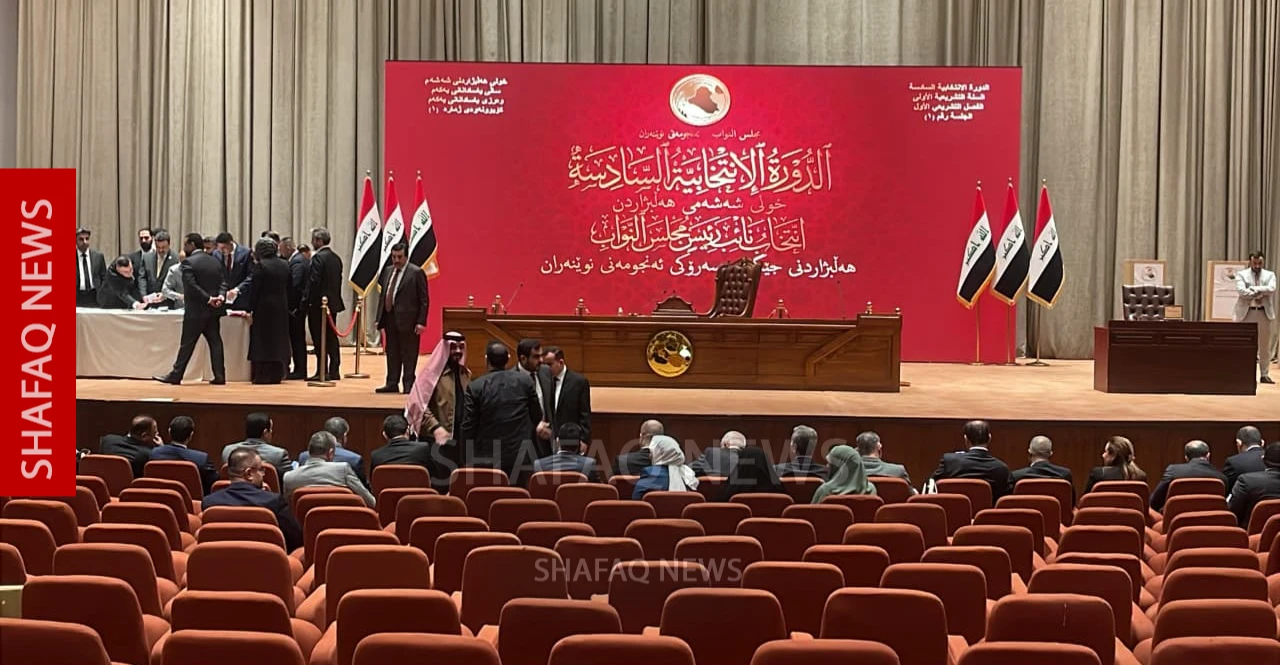
The renewed parliamentary inquiryreflects the same unease. The questions put to the oil ministry, pressing fordetail on a reported plan to supply the US Strategic Petroleum Reserve and tocreate a joint energy fund, signal a governing Coordination Framework underdomestic pressure to show independence from Washington.
: Iraq's energy vulnerability: When apetro-state has no buffer
Exiting the Federal Reservearrangement would require more than a political decision. Iraq cannot move itsreserves to London or Tokyo without first securing the same protection fromseizure that the current setup provides, which means finding other centralbanks or international institutions willing to guarantee it, and absorbing thecosts of the switch. A government consumed by coalition management and fallingoil prices has shown no appetite for that work.
Written and edited by Shafaq Newsstaff.