Shafaq News- Baghdad
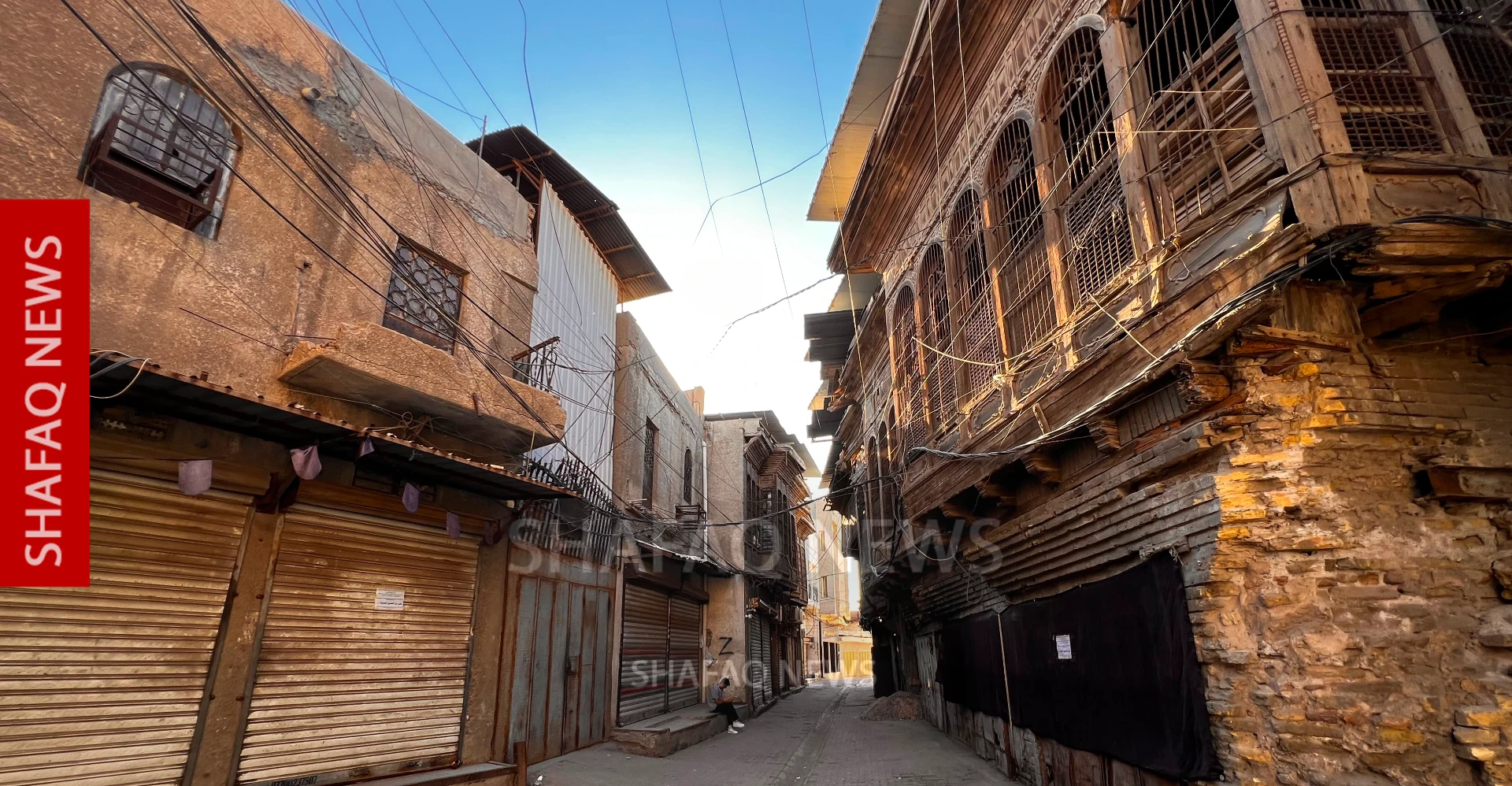
Crumbling buildings and years of neglect have leftBaghdad's historic Al-Turat Quarter in poor condition, prompting residents andheritage experts to call on authorities to restore one of the capital's oldestneighborhoods and preserve a district once home to much of its Jewishcommunity.
Located in Baghdad's Qanbar Ali district near Al-Sadriyah,Al-Turat Quarter is known for its traditional Baghdadi architecture and itsplace in the city's commercial and social history.
Mohammed Hareb, an academic specializing in Baghdad'shistory, explained to Shafaq News that the neighborhood was inhabited primarilyby Jewish residents during the 1920s and 1930s until the beginning of theirdisplacement in the 1940s.
"Al-Turat, as the name suggests, is the holy bookrevealed to the Prophet Moses," Hareb noted. "The Jewish community'sclose association with it led them to name the neighborhood after it, wherethey lived for many years."
Hareb added that many members of Baghdad's Jewish communitywere active in trade and commerce, making the neighborhood a natural extensionof nearby Al-Shorja market, which remains one of Iraq's principal commercialcenters.
Much of the quarter has deteriorated after decades withoutrestoration. Cracked walls, aging buildings, humidity, and changing weatherconditions have weakened many structures, posing a risk to residents andpedestrians.
Faleh Saddam, a resident of the Qanbar Ali area, observedthat the condition of buildings in the former Jewish quarter has continued todeteriorate over time.
Recalling that Baghdad launched a campaign several yearsago to restore a number of historic neighborhoods across the capital, hecautioned that Al-Turat Quarter received little attention despite itssignificance.
He also urged the relevant authorities, particularlythe Baghdad Municipality, to rehabilitate the neighborhood, describing it as animportant part of Baghdad's history and a reminder of the coexistence thatcharacterized the city's religious and social communities for decades.
The Baghdad Municipality previously introduced the Baghdad Pulse initiative (Nabd Baghdad)to restore several heritage areas across the capital. The projectincluded the rehabilitation of Al-Mutanabbi Street as a cultural and touristdestination, restoration work along Al-Saray Street, including heritagebuildings surrounding Al-Shabandar Café and Ambassador Square, as well as therehabilitation of Al-Rasheed Street.
Despite those projects, many of Baghdad's historicneighborhoods and archaeological sites remain without restoration, leaving animportant part of the city's architectural and cultural heritage vulnerable tofurther deterioration.
: Discover Iraq: Baghdad, a city shaped by conflict and enduring hope