Shafaq News- Erbil
Despite Erbil's rapid urban expansion and modernization,traditional markets and crafts remain an integral part of the capital'sidentity. Among them is the city's prayer bead market, located near thehistoric Erbil Citadel, which continues to attract both residents and touristsseeking handcrafted items rooted in local heritage.
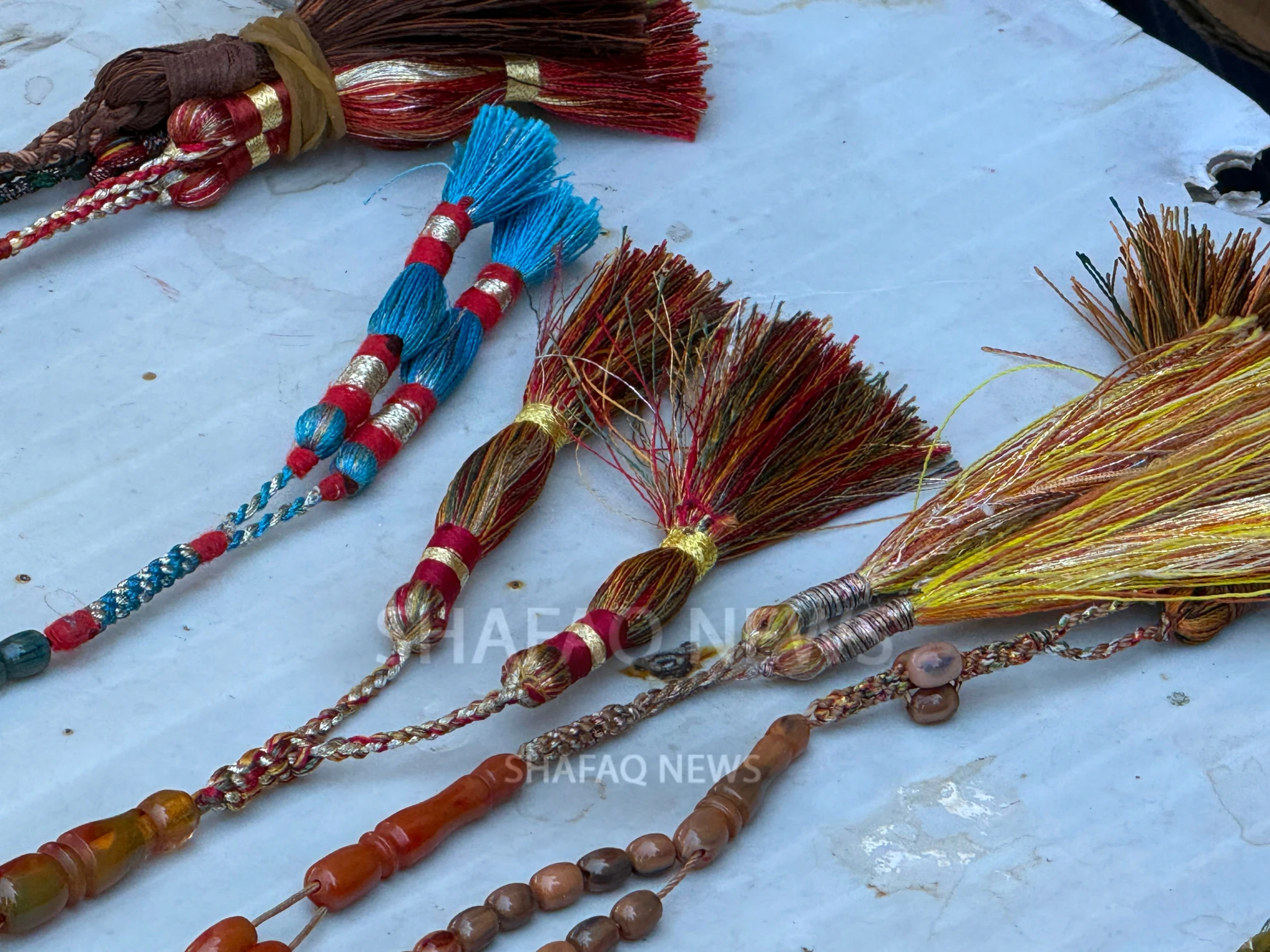
A visit by Shafaq News correspondent found the marketbustling with shoppers browsing a wide range of prayer beads, from green qazwanbeads and polyester designs to semi-precious stones such as Yemeni agate. Vendors also offer modern electronic prayer counters, with some premium itemsselling for significantly higher prices.
Abdul Mawjood Shawani, a prayer bead vendor, told ShafaqNews that demand remains steady throughout the year. "Prices start ataround 2,000 Iraqi dinars ($1.50) and can reach 200,000 dinars (about $150),depending on the material and craftsmanship.”
Shawani noted that customer preferences vary by age,indicating that young people often prefer smaller prayer beads that can also beworn as accessories, while older customers generally choose longer, moretraditional designs.
Owning prayer beads remains part of Kurdish social andcultural traditions, Mahmoud Samer, a young customer, said, adding that he alwayslooks for a prayer bead that matches traditional Kurdish clothing duringspecial occasions. “The market offers a wide selection for different age groupsat very reasonable prices compared with other places."
Tourist Ibrahim, who was visiting Erbil, noted that themarket offered a distinctive glimpse into the city's heritage. "I waslooking for a souvenir that reflects Erbil's identity, and I found thesehandcrafted prayer beads to be genuine works of art,” he stressed, describing theseprayer beads as representing a living tradition, “not just merchandise.”