ShafaqNews
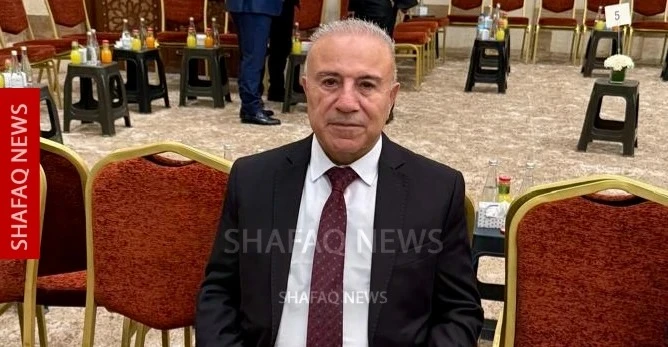
AbdulHakim Bashar, a Syrian Kurdish leader, member of the People's Assembly andmember of the political bureau of the Kurdistan Democratic Party –Syria, spoketo Shafaq News about the first session of the new assembly, the level ofKurdish representation in it, the files Kurdish deputies intend to raise, andthe limits of the agreements reached between Damascus and the Syrian DemocraticForces (SDF).
Theinterview was conducted in Arabic. It has been translated and edited for lengthand clarity.
Q: How doyou assess the first session of the People's Assembly?
A: Thecurrent assembly is clearly different from the assemblies formed under the previoussystem, particularly with the absence of the scenes of applause for thepresident and the glorification slogans that used to accompany its sessions. This change is a positive development that reflects a shift in the nature ofthe political scene. Still, it is too early to judge the assembly and itsability to establish a new political and legislative phase.
Q: Whatwill determine that judgment?
A: Thereal test will be the assembly's performance in the coming phase, and itsability to respond to the aspirations of Syrians of all components and totranslate them into legislation and policies that strengthen justice,participation, and equal citizenship.
Q: How doyou evaluate the Kurdish presence in that first session?
A: Theresults were not at the hoped-for level. The Kurds are represented by 12members belonging to different political currents and backgrounds, which meansthat forming a weighty and effective Kurdish bloc needs more time andcoordination.
Q: Why doyou describe the representation as insufficient?
A: It isbelow the deserved level and does not correspond to the Kurdish share of thepopulation, which I estimate at around 15 percent of Syria's population, in theabsence of recent and approved official statistics. Representation matchingthat proportion would have given the Kurds at least between 30 and 32 seats,instead of the twelve they currently hold.
Q: Whatproduced this outcome?
A: Twomain factors. The first is the absence of a clear political agreement betweenthe Kurdish movement and the Syrian authorities on the Kurdish question, andresponsibility for that is shared between the two sides. The Kurdish movementhas not been politically active in Damascus to a sufficient degree, while theSyrian authorities have not moved to launch a serious and comprehensivepolitical dialogue with it.
Q: Andthe second factor?
A: It islinked to the mechanism by which the assembly was formed, which did not rely onfree and direct popular elections, because of the exceptional circumstancesSyria is passing through. That affected the level of representation of theKurds and of the other components.
Q: Didthe timing of the selection process play a role?
A: Theselection of assembly members in the Kurdish areas took place late comparedwith other Syrian areas, which gave deputies chosen earlier more time to reachunderstandings and build alliances over the distribution of the assembly'sposts and bodies. Information also circulated about certain figures receivingsupport during the competition for positions, and in my assessment that wasreflected in the final results of the formation of the assembly's bodies.
Q: Arethe Kurdish deputies working as a bloc?
A: TheKurdish deputies have held several meetings and agreed during them to work in ateam spirit and to coordinate on general national issues, alongside filesrelated to Kurdish society. This coordination is still in its early stages andneeds more time and effort to reach a more effective formula for cooperation. Collective work is the best way to strengthen the presence of Kurdish deputiesand to serve the national interest at the same time.
Q: How doyou define the balance between national and community work inside the assembly?
A:National work must be the basis inside the assembly, and the priority must beto serve all Syrians, away from narrow partisan, nationalist or sectariancalculations. At the same time, the existence of parties and political currentsis a fundamental pillar of any sound political life, and the presence of aresponsible national opposition inside or outside parliament strengthensdemocracy, transparency and oversight of the executive authority.
Q: Whatfiles do the Kurdish deputies intend to raise?
A: Thepriorities are divided between general national issues and others linkeddirectly to Kurdish rights and the particularity of the Kurdish areas, but theyall fall within the project of building a state of citizenship and justice.
Q: Whatcomes first?
A: Areview of the exceptional laws and measures related to land ownership in theKurdish areas. Large areas still lack the real estate title deeds known as the"green tabu," and proof of ownership rests on judicial rulings orother documents. The deputies will also work to open the files of landexpropriation and the exceptional legislation that harmed residents of theKurdish areas over past decades.
Q: Whatabout services and the economy?
A: Thedevelopment and services file carries similar importance, particularlyimproving infrastructure, securing water and electricity, developing roadnetworks and raising the level of education, health and public services. Supporting the agriculture and industry sectors matters as well, in a way thatcontributes to providing jobs and achieving sustainable development in areasthat suffered for years from neglect, war and declining investment.
Q: Arethere other consequences that need to be addressed?
A: Yes,the negative effects left by the years of self-administration, among them thedangers threatening the safety of civilians, and the environmental and healthdamage caused by extracting and refining oil by primitive means.
Q: And atthe political level?
A:Recognition of the national rights of the Kurdish people remains a mainpriority and should be fixed in the new Syrian constitution, in a way thatacknowledges national and cultural plurality and guarantees equal citizenshipfor individuals and ethnic groups. The form of the Syrian state must be anessential part of the national and constitutional dialogue, in a way thatpreserves the unity of the country and establishes sound governance and adecentralized system that guarantees the participation of all components.
Q: Whatspecific demands does that include?
A:Reconsidering the official name of the state so that it expresses all Syrians,recognizing the Kurdish language as an official language alongside Arabic inKurdish-majority areas, and addressing the effects of the Arab Belt projectaccording to a just national vision. It also includes completing the treatmentof the issue of Kurds deprived of citizenship, fixing the legal status of thosewho have regained it, and guaranteeing effective Kurdish participation in anycommittee tasked with drafting the new Syrian constitution.
: Kurds in Syria: From marginalization to a defining political force
Q: Canthe assembly deliver on these demands?
A: Somedemands related to the form of the state, language and national recognition gobeyond the direct powers of the People's Assembly and are tied to theconstitutional process and to national political understandings. The assemblycan, however, prepare the political and legislative ground for these files andopen a serious national discussion leading to just and sustainable solutions.
Q: Hasthe relationship between the Kurdish forces and the government moved toinstitutional work?
A:Speaking about such a transition requires first defining what is meant by theKurdish forces, given the multiplicity of currents and projects inside theSyrian Kurdish political scene.
Q: How doyou read the SDF's approach?
A: In myview, the political approach of the Syrian Democratic Forces is not based on aKurdish national project in the traditional sense, but rests on the concepts ofthe democratic nation and the brotherhood of peoples, and calls for movingbeyond closed national identities.
Q: Whathas that meant for the negotiations with Damascus?
A: Thenegotiations focused on the future of the military, security, and civilinstitutions belonging to the forces and the self-administration, and on themechanism for integrating them into the institutions of the Syrian state, morethan on recognition of Kurdish identity and national rights. The core of thenegotiations revolves around the nature of the integration, the distribution ofpowers and posts inside state agencies, and the arrangement of leadership andadministrative structures.
Q: Doesthe agreement resolve the Kurdish question?
A: Theagreement with the SDF does not resolve the Kurdish question and does notguarantee the political rights of the Kurds or their representation in stateinstitutions. It moves within financial, security, military, and administrativearrangements, and it cannot be a substitute for a comprehensive politicalsolution to the Kurdish question in Syria.
Q: Wheredo the other Kurdish parties stand?
A: TheKurdish National Council and other Kurdish parties proceed from a differentvision that focuses on fixing Kurdish rights within the framework of the Syrianstate. Their communication with the authorities has so far been limited tomeetings between the council's leadership and some Syrian officials, among themthe foreign minister and transitional President Ahmed al-Sharaa. These meetingsare important steps toward opening channels of communication, but they remainfar from the level of political negotiations that could produce a clearinstitutional framework for the relationship between the Kurds and the state.
Q: So howwould you describe the current stage?
A: WhatSyria is witnessing now is the beginning of negotiating tracks and unevenpolitical contacts between different parties, not a comprehensive institutionalagreement defining the nature of the future relationship. Building a stableinstitutional relationship needs a political dialogue that includes the variousconcerned forces, followed by legal and constitutional arrangements thatguarantee rights and define responsibilities and powers. Institutions are notbuilt only through merging existing structures, but through a politicalconsensus that determines the form of the state and the relationship of itscomponents to it.
Q: Whatrole has the Kurdistan Region of Iraq played?
A: TheKurdistan Region and Kurdish leader Masoud Barzani played an influential rolein bringing the viewpoints of the Syrian government and the Syrian DemocraticForces closer, and in contributing to opening channels of communication betweenthe two sides. Erbil's role stood out during sensitive stages through effortsto avoid military escalation in the Kurdish areas and to limit thetransformation of political disputes into a wider Arab-Kurdish clash. That rolehas made the Kurdistan Region an important station for regional andinternational parties concerned with Syria's stability and the future of therelationship between Damascus and the Kurdish forces.
Q: Whatabout outside mediation?
A: Theefforts of the Kurdistan Region were accompanied by direct American mediationand French support for the negotiations, with the aim of reaching a formulathat prevents a return to confrontations and opens the way to clearer politicaland institutional arrangements. But the success of the coming understandingsdoes not depend on external mediation alone. It is linked above all to theability of the Syrian parties to reach a comprehensive political agreement thataddresses questions of power, administration and rights.
Q: Whatis required now?
A: Whatis required is turning the temporary understandings into a sustainableinstitutional framework that guarantees Syria's unity and the rights of all itscomponents and prevents the country from returning to the conflicts anddivisions that accompanied it during past years.
: Kurds: International betrayal victims