Shafaq News
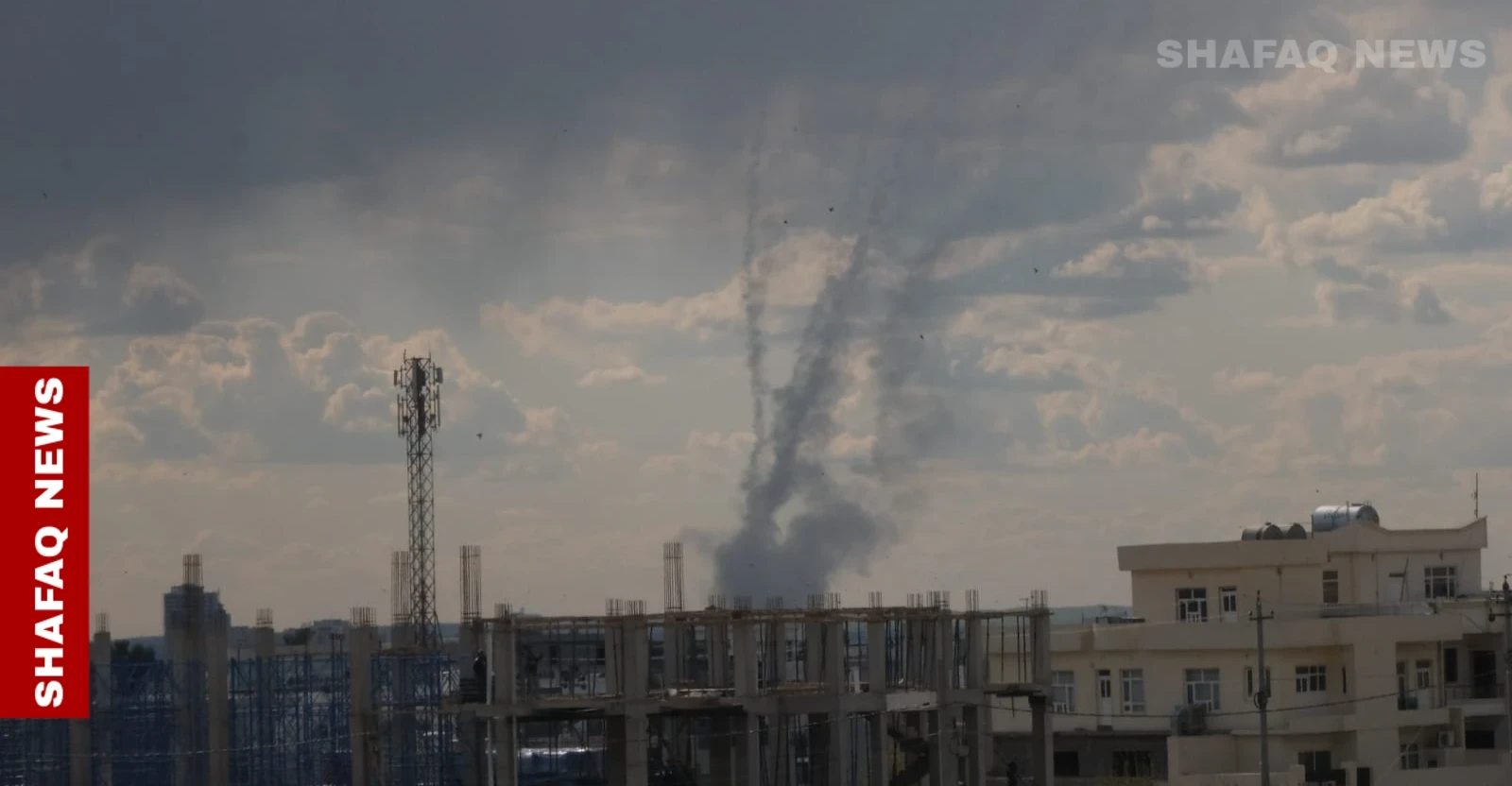
For the fourth time in three days, US-led Coalition air defenses shotdown a swarm of explosive-laden drones over Erbil, destroying 16 of them on July17 as residents heard explosions and watched interceptors light the sky. No onewas hurt, and no one claimed the attack. And no Iraqi authority has said wholaunched it, the same void that followed an identical eight-drone salvo on July15.
That void is now the story. Four attacks on the same US-facing targetinside 48 hours, both timed to the immediate aftermath of Prime Minister Alial-Zaidi's first White House visit, have turned a single security incident intosomething closer to a campaign. Yet the most basic question —who is strikingIraq's Kurdistan Region, and to what end— remains formally unanswered by thestate on whose territory the drones are falling. For an autonomous region thatdeclared itself neutral in the war raging around it, the accumulating silenceis a governance failure with a body count.
: Between war and neutrality: Kurdistan navigates escalating US-Iran confrontation
The stakes are set by geography and the tally of past attacks. Erbilhosts the US consulate and an air base that has become, by default, the mostexposed American military position in the country. As US-led Coalition forcesprepare to complete their withdrawal from Iraq by September 30 and consolidatewhat remains in Kurdistan, Erbil Air Base becomes the single most obvious UStarget left in the country. The drones now arriving over the city, in otherwords, may be the leading edge of a problem that the coalition's departure willsharpen rather than resolve.
This is not the Kurdistan Region's first exposure, which is what givesthe current wave its weight. Between February 28, the day a US-Israeli war onIran erupted, and April 20, the Kurdistan Regional Government (KRG) documented809 drone and missile attacks on its territory, killing 20 civilians andwounding 123. Erbil Province absorbed 477 of them. The KRG's own tally noted,pointedly, that Iraqi Kurdistan ranked first among non-combatant areas forhuman and material losses in a war it had refused to join. Iran-aligned Iraqifactions claimed a large share of those strikes at the time. The federalgovernment in Baghdad, then as now, was asked to identify and prosecute thoseresponsible.
Untangling the current attacks requires separating threads that areeasily, and sometimes deliberately, confused. One strand is unmistakablyTehran's. Through early July, the Islamic Revolutionary Guard Corps struckcamps belonging to Iranian-Kurdish opposition party Komala on the outskirts ofErbil and al-Sulaymaniyah. But what happened on July 17 seems to be thestarkest, when violence arrived over Iraqi Kurdistan in at least six separateattacks within hours of each other, three in al-Sulaymaniyah province against Iranianopposition Kurdish parties, and three over Erbil, one against Komala, and two onthe US Consulate.
The deadliest struck the Komala party's positions, killing at least ninefighters as bodies remained trapped in caves in the rugged terrain; Kurdistansecurity authorities counted at least seven strikes on the group's sites,without naming Iran. Two further strikes elsewhere in the province caused nocasualties.
These attacks, despite Iran not claiming responsibility in someincidents, have a known logic: Tehran striking its own exiled dissidents onIraqi soil. They should not be folded into the mystery of the July 15 and 17swarms over Erbil, which flew toward the American presence in the city, wereintercepted mid-air, and were claimed by no one at all.
It is that second category where attribution collapses into competingreadings. The US Mission in Iraq has been the most direct, warning citizensafter July 15 of "Iran-enabled drone attacks on Erbil," an on-recordAmerican characterization pointing at Tehran's hand. Prime Minister andCommander-in-Chief Ali Al-Zaidi condemned the assault as “a malicious attempt”to destabilize Iraq and ordered federal agencies to coordinate with theKurdistan Region’s authorities to identify those responsible and prevent furtherincidents. Al-Zaidi’s statement did not hold any party directly responsible.
: 650 Strikes in Iraqi Kurdistan: How deniability became a weapon
The Kurdistan Region presidency condemned the attacks as a violation ofIraqi sovereignty, and “a betrayal of Iraq,” without naming Tehran. But theKurdistan Regional Government explicitly rejected “the unjustified attackscarried out by the Islamic Republic of Iran against the Kurdistan Region,”calling on the Iraqi government and the international community “to put an endto these violations.” KRG did not specify if the condemnation related toattacks on Komala or US interests.
Security analyst Sarmad al-Bayati situates the attacks in the US-Iranconfrontation, arguing that a strike aimed at the vicinity of the Americanconsulate carries a political message directed first at President Donald Trump,a response, in his account, to Trump's recent sharp remarks on Iran and on theslain commanders Qassem Soleimani and Abu Mahdi al-Muhandis. The timingsupports him: the US was actively striking Iranian targets around the Strait ofHormuz on the very days the drones flew over Erbil, after a Pakistan-mediatedceasefire collapsed into open exchanges of fire.
Politician Mithal al-Alusi cast the strikes as a "declaration ofwar by the militias" against the Kurdistan Region, “a region that hadbacked al-Zaidi's reform agenda and as a calculated affront to the disarmamentpledges the prime minister carried to Washington.” His reading has teethbecause the September 30 deadline has split the Iran-aligned camp. Asaib Ahlal-Haq and Kataib Imam Ali have agreed to hand their brigades to the state;Kataib Hezbollah, Harakat al-Nujaba and Kataib Sayyid al-Shuhada have refused,with Kataib Hezbollah vowing not to surrender "a single bullet." Anattack that embarrasses al-Zaidi days after his White House reception wouldserve the rejectionists' interest precisely.
Al-Alusi, a longtime hawkish critic of Iran's role in Iraq, insists theperpetrators are "known" and urges Baghdad toward legal anddiplomatic redress, a pointed contrast with a state that has named no one.
And yet the faction most plausibly placed in that frame deniesinvolvement. A spokesperson for Kataib Sayyid al-Shuhada (KSS), Kazemal-Fartousi, told Shafaq News that no operations were launched from Iraq towardErbil and that the resistance factions had carried out no such action. Hisdenial cannot be dismissed, but neither can it be taken as closing the matter:KSS is among the groups rejecting disarmament, and its spokesman has separatelymaintained that US forces in Iraq remain legitimate targets.
: Iraq's September 30 weapons deadline leaves terms of disarmament unresolved
The structural reason attribution stays murky is itself worth namingbecause the "Islamic Resistance in Iraq" is not a single group but anumbrella of interchangeable front names, staffed largely by Kataib Hezbollahpersonnel, under which the harder-line factions operate. Attacks surface underdisposable labels while the parent organizations issue denials, distributingdeniability by design. In that framework, the absence of a claim is notevidence of an outside hand; it is the system working as intended.
Which leaves open a possibility that neither the proxy-signal nor theinternal-defiance reading captures: that the strikes serve simply tomanufacture instability in a region whose neutrality makes it a soft andsymbolically useful target. When drones are intercepted over the cities, theirdebris cleared and their intended target never confirmed, even the object ofthe attack becomes a matter of inference.
What can be stated is narrow. Multiple drone attacks, 48 hours apart,near the American footprint in Erbil, all intercepted, neither claimed, bothlanding on the al-Zaidi government at its moment of maximum exposure toWashington. Everything past that, Tehran, its Iraqi proxies, rejectionistfactions acting against their own government, or actors content merely to keepKurdistan unsettled, remains a reading rather than a finding.
The trajectory suggests the question will not stay abstract. With theGlobal Coalition's withdrawal set for September 30 and Erbil poised to becomethe last significant US military address in Iraq, the incentives to strike thecity are converging rather than easing. The KRG has spent five months askingBaghdad to name and prosecute the perpetrators of 809 attacks. It has receivedcondemnations and no accountability. Until that changes, each new swarm overErbil and al-Sulaymaniyah will arrive with the same signature these carried:real damage, real danger, and no name attached.
: Al-Zaidi's Washington visit links US investment to factions’ disarmament
Written and edited by Shafaq News staff.