Washington-INA
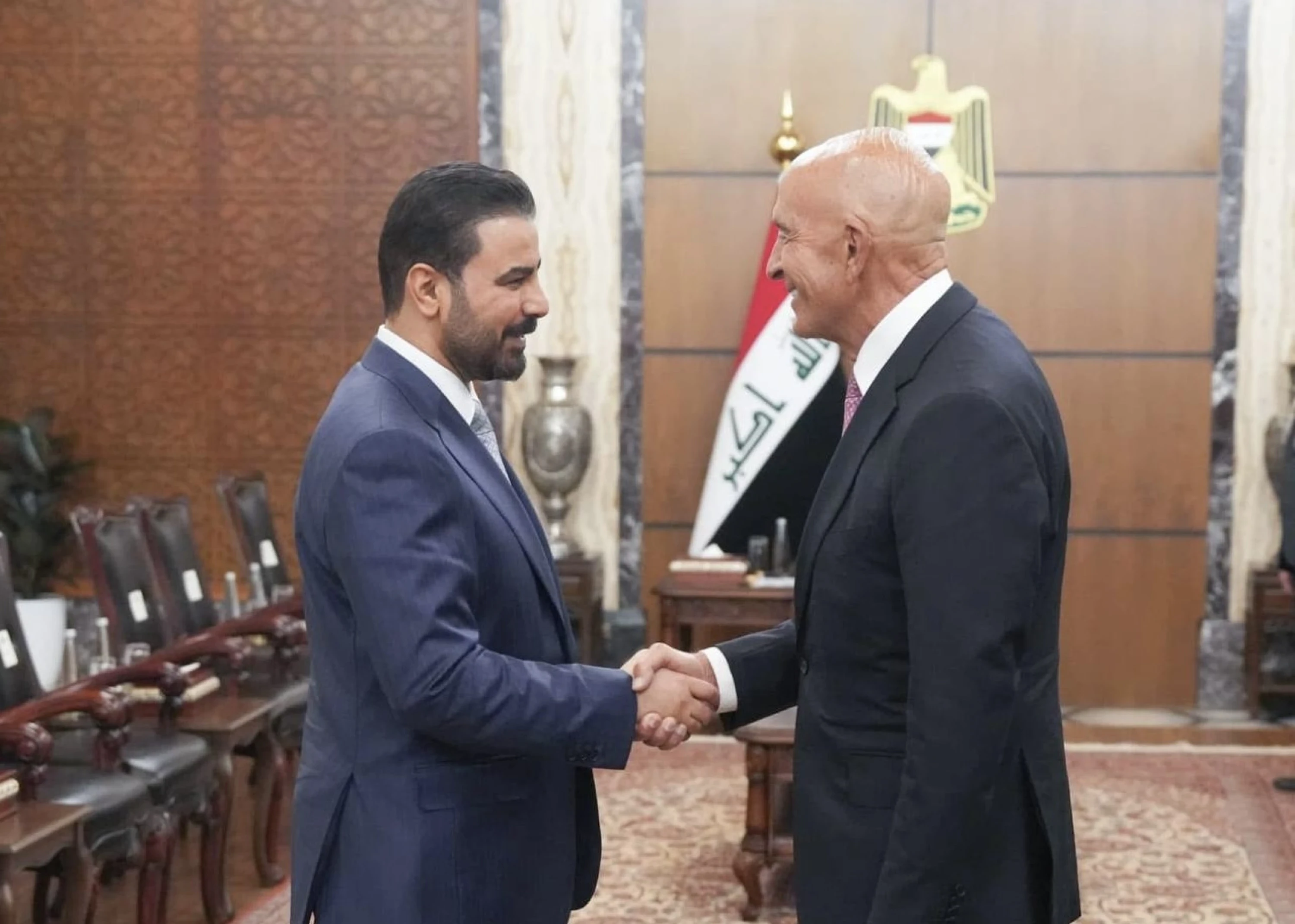
US Presidential Envoy Tom Barrack affirmed on Friday that the business sector is the most effective tool for achieving stability and development. He stated that Prime Minister Ali Faleh al-Zaidi possesses the ability to transform the past phase into a new alliance, and indicated that the US administration is very pleased to be able to support al-Zaidi and his team on all levels.
In a speech delivered at the US-Iraq Business Summit at the Washington Chamber of Commerce, in the presence of a correspondent from the Iraqi News Agency (INA), Barrack said, "The industrial and business sectors are leading the development process, while diplomacy and even nation-states are receding in the face of this role." He pointed out that "the challenge facing Iraqi Prime Minister Ali al-Zaidi is to unify tribal, religious, and cultural diversity within a state characterized by transparency, the rule of law, tolerance, stability, and a vibrant economy."
Barrack noted that "the region has witnessed significant transformations in the recent period," explaining that "what appeared to be a state of confusion and chaos, in light of developments related to Iran, has in reality led to a reshaping of security and strategic alliances."
He added that "attention has shifted from the nuclear issue to the Strait of Hormuz," noting that "the program being developed in coordination with Syria, Jordan, Turkey, Lebanon, and Egypt will render the Strait of Hormuz of secondary importance within two years, by transitioning from the current model of maritime transport through narrow waterways to alternative routes based on the principle of 'precautionary delivery.'"
He pointed out that "the project also includes the development of the central corridor extending from Turkey through Azerbaijan and Turkmenistan to Central Asia, enabling the transport of large quantities of gas to Europe via commercial channels."
Barak emphasized that "the current phase aims to build a different model, one that avoids exclusion and military interventions," noting that "attempts to change regimes in the region since World War I have not been successful."
He explained that "the lesson learned is the importance of having leaders with the competence and ability to manage transformations," stressing that "the region responds to leaders characterized by strength, clarity, and transparency, as these are factors that lead to prosperity."
Barak noted that "Prime Minister Ali al-Zaidi has the ability to transform the course of the past phase into an alliance." “A new approach based on security, cohesion, and partnership,” he emphasized, “We are very pleased to be able to support Prime Minister Al-Zaidi and his team on all levels.”