Shafaq News
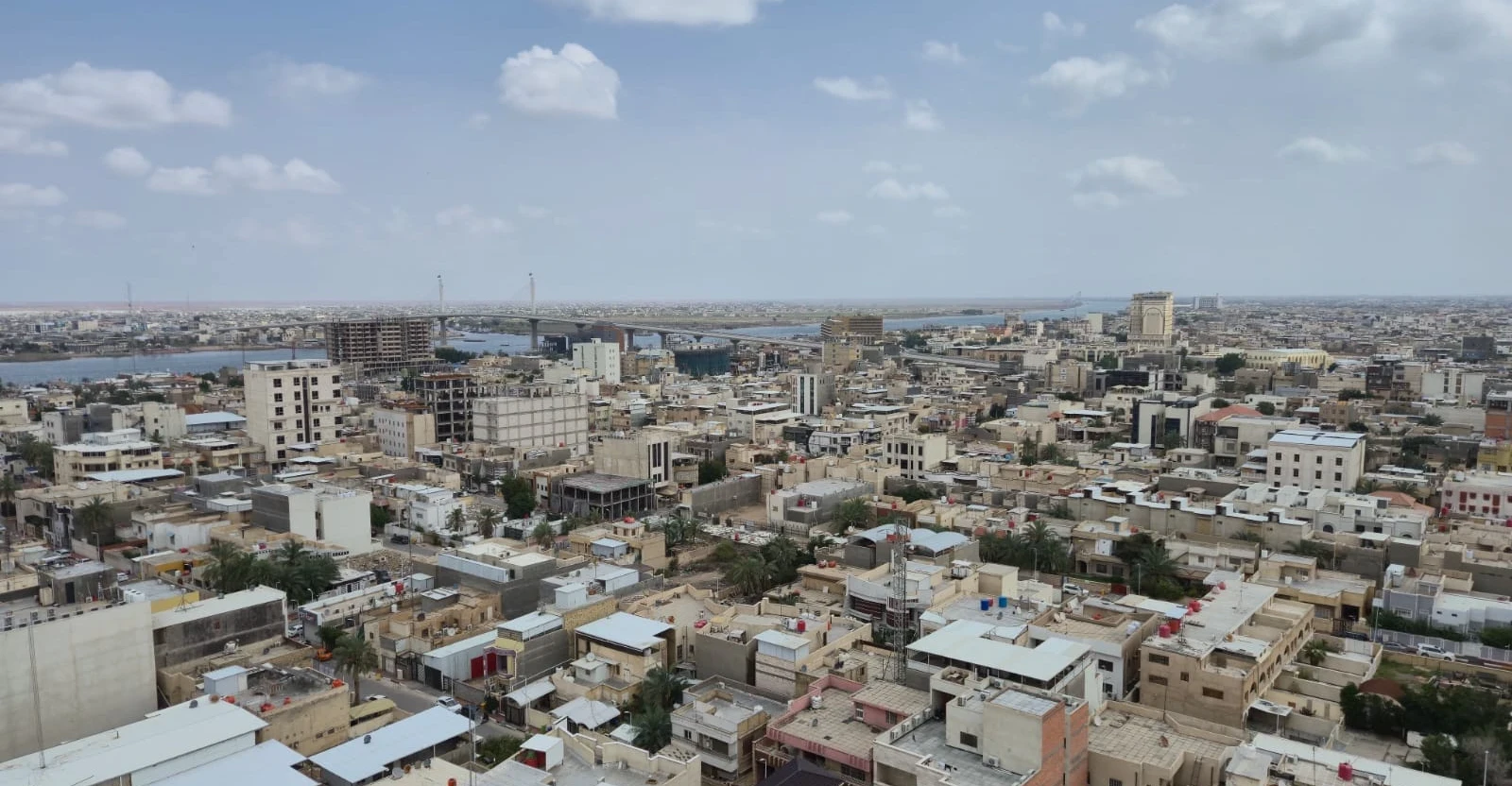
An in-depth look at Basra insouthern Iraq, where vast oil wealth, environmental decay, protest movements,and chronic service failures collide along the Shatt al-Arab.
Where the Tigris and Euphratesconverge into the Shatt al-Arab, Basra has spent centuries caught between whatit produces and what it receives. It generates more than 70% of Iraq's oilrevenues, dispatches over three million barrels daily from fields operated byBritish Petroleum (BP), ExxonMobil, and PetroChina, and moves more than 80% ofthe country's trade through its ports. Its people, meanwhile, have gone withoutreliable drinking water for decades.
That contradiction is not a paradox. It is a policy outcome —and Basra's residents have stopped pretendingotherwise.
: Iraq’s oil bottleneck: Abundance trapped by dependency
Land and Legacy
Basra's geography made itinevitable. Bordered by Iran to the east, Kuwait to the south, and the ArabianGulf at its foot, it sits at the only point where Iraq touches the sea. AncientSumerian settlements once occupied this delta. The early Islamic stateestablished a military garrison here in 636 CE, and under the Abbasids itbecame one of the medieval world's foremost centers of scholarship and commerce—the city where the essayist Al-Jahiz wrote and where Hasan al-Basri'steachings shaped Islamic intellectual tradition.
That history is not ornamental. Itexplains why Basra's relationship with Baghdad has always carried a specificgrievance: the sense of a city that built civilization and was thenadministered into decline.
The Ottomans left it underdeveloped. The British came for its port. The 1920 rebellion, the 1991 Shia uprisingagainst Saddam Hussein, and the post-2003 armed contest between Iran-backedfactions and tribal powerbrokers each extracted their toll. "Basra wasonce the intellectual pulse of the caliphate," said historian Dr. Adnanal-Kazemi. "Its decline tells us much about how states forget theirroots."
A Population Holding
Basra is home to over three millionpeople, making it Iraq's second-largest province. It is predominantly ShiaMuslim but was historically more plural. Jewish trading communities departedafter the 1950s. Christians and Mandaeans —followers of one of the world'soldest surviving religions, practiced along the riverbanks of southern Iraq—remain, though in diminished numbers.
The Mandaeans of Qarmat Ali stillperform their baptismal rites in the Shatt al-Arab, a practice dating backmillennia. River pollution has made that increasingly difficult. An elder inthe community put it plainly: the congregation has begun using bottled waterfor rituals the river can no longer safely hold.
Tribal structures —clans such asBani Malik and Albu Muhammad— continue to govern land disputes and mediateconflicts faster than formal courts. They also shape parliamentary politics. Yet a younger generation is pulling against that gravity. Youth unemploymentexceeded 40% in 2024, according to Iraqi government labor figures, and theresulting pressure has produced a cohort of organizers, particularly women,running NGOs, leading protests, and filling university faculties. "Wedon't want another sermon or another militia," said Hiba Rahi, a medicalstudent who became a protest organizer during the 2019 unrest. "We wantclean water, dignity, and a future we can believe in."
: Five days to eternity: inside the Mandaeans' sacred Brunaya
Wealth Beneath, Poverty Above
The numbers are not subtle. OfIraq's 4.5 million barrels exported daily, Basra's fields —Rumaila, Majnoon,and West Qurna among them— account for roughly three million. The ports of UmmQasr and Khor al-Zubair process the overwhelming majority of Iraq's imports andexports. The long-promised Grand Faw Port, which would rank among the region'slargest, has been stalled for years by delays, corruption investigations, andcompeting geopolitical interests.
What the oil revenue finances, inpractical terms, is the federal budget in Baghdad. What it does not reliablyfinance is Basra's water system. A 2023 UNICEF assessment found that nearly 60%of Basra's residents lacked access to safe drinking water. In 2018,contamination of the water supply sent more than 118,000 people to hospital ina single season — a public health emergency that drew international attentionand then faded from the news cycle without structural resolution.
Power cuts run up to 18 hours a dayduring summer, when temperatures routinely exceed 50 degrees Celsius. The citythat produces the energy Iraq sells to the world cannot keep its own lights on.
: Thirsty for solutions: Water scarcity grips Iraq
The Salting of the South
Basra's ecological collapse isslower and less dramatic than a protest or a power cut. It is also morepermanent.
In the 1970s, the province held morethan 30 million date palms. Fewer than a third remain. The Shatt al-Arab, oncea freshwater artery sustaining agriculture, fisheries, and a distinctiveriverine culture, has been progressively salinized by upstream dams in Iran andTurkiye, reduced seasonal flow, and rising sea levels pushing Gulf waterinland.
During drought periods, salinity inthe river has exceeded 6,000 parts per million —far beyond the World HealthOrganization's safe threshold for drinking water. Barbel fish and shrimp, oncecentral to local diets and livelihoods, have largely disappeared. By 2022,Iraq's Ministry of Water Resources assessed that 40% of Basra's farmland hadbecome unfit for cultivation.
"In some villages, even thepalm trees have died," said agronomist Layla Hadi. "That is like thedesert claiming our identity."
Reed replanting and canal dredginghave shown limited results in areas north of the city. Without binding regionalwater-sharing agreements —currently nonexistent between Iraq, Iran, andTurkiye— and climate-adapted infrastructure investment, recovery projectionsremain theoretical.
: A century of promises: Iraq’s water diplomacy with Turkiye and Iran
Culture Under Pressure
Basra produced Badr Shakiral-Sayyab, whose 1954 poem "Rain Song" is among the most cited worksin modern Arabic literature —a elegy for fertility, loss, and longing thatreads, in retrospect, like a dispatch from the city's future.
The arts have not stopped. The BasraArts Forum mounts exhibitions in repurposed buildings. City walls carry muralsand graffiti, some political ("Basra thirsts while Baghdad drinks"),some memorial —portraits of activists killed during the 2018 and 2019 protests. The University of Basra enrolls over 100,000 students. In 2023, its roboticsteam placed second in a regional competition, building their machines fromsalvaged components. "We build with scraps what others get with budgets,"said team member Rana Saleh.
That line is not a metaphor. It is adescription of how the city functions.
A City That Moved the Country
In July 2018, Basra's accumulatedgrievances broke into open revolt. Protesters burned the offices of politicalparties and Iranian consulate. The chant that filled the streets —"No tosectarianism, yes to Basrawi identity"— was a direct rejection of thepost-2003 political order that had sorted Iraqis by sect and delivered littleelse.
The unrest did not resolve Basra'sproblems. It did something else: it demonstrated that the fear barrier could bebroken. Within a year, the protest movement had spread nationwide, producingthe October 2019 uprising that brought hundreds of thousands into the streetsacross Iraq and ultimately forced a change of government. "Basra startedit all," said political analyst Layth al-Obaidi. "It broke the fearbarrier and reshaped Iraq's protest culture."
The demands now circulating inBasra's civic and political spaces are institutional: constitutional amendmentsto redirect a larger share of oil revenues to the province, greateradministrative autonomy, and accountability for service failures. "Whyshould our wealth enrich others while our hospitals lack medicine?" saidteacher Saeed Majid.
: Iraq’s protests after Tishreen: A system that learned how to contain the street
Written and edited by Shafaq Newsstaff.