Shafaq News- Baghdad
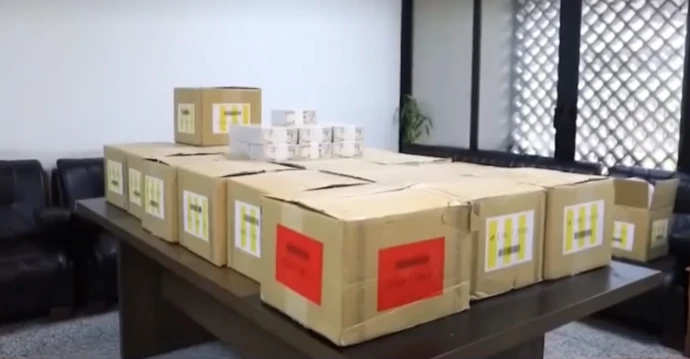
Photographs and videos of newly issued Iraqi dinars and US dollarsseized during Iraq's latest anti-corruption campaign have sparked questionsabout the source of the cash, prompting a former Central Bank of Iraq (CBI)official to explain that such banknotes can enter corruption cases throughnormal circulation channels rather than directly from the central bank.
Mahmoud Dagher, a financial expert and former CBI director, told ShafaqNews on Wednesday that newly printed banknotes routinely enter the marketthrough commercial banks, which receive fresh currency from the CBI anddistribute it to customers through regular withdrawals.
“Individuals, companies, government institutions, and other accountholders obtain those banknotes when accessing funds from their accounts,” headded, arguing that once the money leaves the banking system, it becomes partof the broader cash economy and may pass through numerous hands.
Estimating that nearly 95 trillion Iraqi dinars (about $72.5B) arecurrently circulating outside the banking sector, he noted that the sheervolume of cash moving through the economy makes it possible for banknotes toend up in corrupt transactions.
“Cash-based dealings are a key factor in many corruption cases,” heremarked, stressing that electronic payments offer greater transparency becausethey leave records that can be tracked and reviewed by authorities.
Last week, under a directive from Iraqi Prime Minister Ali al-Zaidi,Iraq launched the nationwide “Dawn Crackdown” anti-corruption campaign, whichhas so far targeted political officials, lawmakers, business figures, andsuspected networks accused in public funds cases. A source familiar informedShafaq News that the campaign led to 67 detainees within its first 24 hours,while another source indicated that the initial phase targets more than 200figures as part of a broader six-month effort to combat corruption and recoverpublic funds.
Integrity Commission Chairman Mohammed Ali al-Lami pointed to the arrestof senior suspects and the recovery of billions of dinars for the statetreasury as evidence of close coordination between oversight institutions andthe judiciary.
During a meeting with Bassem al-Badri, the newly appointed chief of theNational Security Service, al-Lami underlined the role of recent operations incurbing cases of extortion and coercion that citizens may encounter whileseeking public services or completing official procedures.
For his part, al-Badri affirmed the Agency's readiness to deepencooperation with the Integrity Commission, describing the recent arrests as acontribution to protecting citizens from corruption-related crimes andstrengthening confidence in state institutions.
: Iraq detains top officials in anti-corruption sweep: What we know so far