Shafaq News
Iraqi securityforces detained 47 officials, lawmakers, and businessmen across Baghdad andseveral provinces on Sunday in one of the country's largest anti-corruptionoperations in years, according to security and judicial sources. The arrests,which began before dawn and were carried out under the direct supervision ofthe prime minister, Ali al-Zaidi, form the first phase of a wider campaign thatofficials say could reach more senior figures in the state.
Who WasDetained, Who Is Next?
The officialstate news agency (INA) named those held, led by Muthanna al-Samarrai, head ofthe al-Azm Alliance and a member of parliament. The list also included sittinglawmakers Ziyad al-Janabi, Bahaa al-Nouri, Mohammed al-Karbouli, Aliya Nasif,Mohammed Jamil al-Mayahi, Hassan al-Khafaji, Abdul Rahman al-Luwaizi, Mudaral-Karaawi, Hind al-Abbasi, Mohammed Furman al-Jubouri, and Bushra al-Qaisi.
Also named wereformer lawmaker Mohammed al-Sayhoud, Oil Ministry Undersecretary forDistribution Affairs Ali Maarij, and former government adviser Ibrahimal-Sumaidaie.
The detaineesalso included civil servants, directors general, politicians, and businessmen. According to Shafaq sources, a second planned phase would reach politicalbodies, lawmakers, directors general, and businessmen described as"first-degree" figures.
How theOperation Unfolded
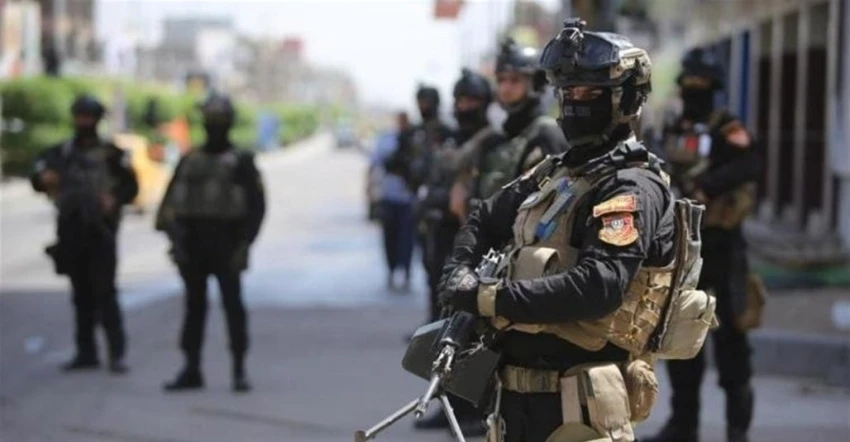
A securitysource told Shafaq News that the security forces sealed off the entrances tothe Green Zone, Baghdad's fortified government district, in the early hours ofSunday. Counter-Terrorism Service (CTC) units set up dense checkpoints andscreened anyone leaving, with the only exemption granted to students carryingexamination cards.
The SpecialDivision detained more than eight people at dawn, among them members ofparliament, on judicial warrants tied to financial and administrativecorruption, the same source said, adding that a CTC units pushed into theal-Shaab district north of the capital to carry out similar warrants.
The raidsextended beyond the Green Zone and al-Shaab to several Baghdad districts,including Sadr City, Zayouna, al-Yarmouk, al-Mansour, and the al-Qadisiyahresidential complex, as well as the provinces of Babil, Maysan, and Erbil. Asecond security source said the operation also reached the Midland Oil Companyover allegations that staff were involved in financial corruption, while travelbans were imposed on several politicians and businessmen until theinvestigations are completed.
The operationpassed without any security breach, friction, resistance, or exchange ofgunfire, another informed source told Shafaq News, saying armored vehicles weremoved only to close the entrances of the Green Zone as a precaution.
All detaineeswere handed to the Integrity Commission, and large sums of cash were seized atthe homes and offices of those held, to be announced once final accounting iscomplete, the same source said.
The inquirydrew in part on the testimony of detained officials, among them former OilMinistry Undersecretary for Refining Affairs Adnan al-Jumaili, whoseconfessions are believed to have opened new files and produced arrest warrantsagainst others linked to government contracts and deals, according to securityand judicial sources. Some of those sought managed to leave their officesbefore the raids, prompting forces to tighten measures, the sources said, withofficials remaining silent on the final number of detainees and the nature ofthe files.
Reactions AndSupport
Anti-corruptionsits at the top of the agenda for the new government of Prime Minister Alial-Zaidi, whose program commits to institutional reform across ministries,digital transformation to cut bureaucracy, financial investigation mechanismsrunning alongside legal proceedings, decentralization of authority to theprovinces, and a national anti-corruption framework.
The arrests arecontinuing as part of that plan, and the approach will persist as a pillar ofstate sovereignty, government spokesman Haider al-Aboudi told media outlets,adding that the campaign had drawn praise for being conducted transparently toprotect public funds.
The FederalIntegrity Commission, Iraq's main anti-corruption body, described the operationas the fruit of joint and complementary efforts among the judicial, executive,and legislative authorities alongside its own work.
Support camefrom many political figures. Nouri al-Maliki, leader of the State of Lawcoalition and a former prime minister of Iraq, congratulated al-Zaidi on thepursuit of those accused of corruption and affirmed his backing for the effort. Muqtada al-Sadr, head of the Patriotic Shiite Movement, also voiced support,urging al-Zaidi to press ahead with corruption cases regardless of thesuspects' political affiliation.
TheReconstruction and Development Coalition, led by former Prime Minister MohammedShia al-Sudani voiced support for the government's campaign, warning against“misinformation” spread by those implicated in corruption cases.
In parliament,Hamed al-Fatlawi, a member of the Integrity Committee, told Shafaq News thatthe drive marked a fundamental shift because it was the first to reachhigh-ranking political figures, adding that the inquiry remained confidentialand that further suspects had yet to be named. He urged that the campaign beexpanded nationwide to prosecute any governor, director general, or officialfound guilty, regardless of political affiliation.
Iraq's BarAssociation declined to provide legal defense for those detained in thecampaign. In a statement, it welcomed “the serious and practical steps toconfront corruption.” The association described the campaign as a potentialturning point that could open a new window for Iraqis, provided it was matchedby sustained political will to recover state assets, enforce accountability,and strengthen institutions.
The WiderContext
Iraq stillranks low on international transparency measures, placing 136th out of 182countries in the 2025 Corruption Perceptions Index. Various estimates indicatethe country lost hundreds of billions of dollars over the past two decades tocorruption and mismanagement, with some official sources putting the wastedsums at between 150 and 300 billion dollars. The arrests also follow a broadercampaign in recent weeks that led to the dismissal of a number of officialsover corruption, negligence, and the waste of public funds, including at theMinistry of Electricity.
The campaignforms part of a wider anti-corruption drive that al-Zaidi has pursued sincetaking office, and unfolds after Iraq's most notorious graft case, knowndomestically as the Theft Of The Century, the embezzlement of roughly 2.5–3.7trillion dinars ($1.9–$2.8B), from the General Commission of Taxes throughhundreds of forged checks cashed between 2021 and 2022. Thirteen people wereconvicted over that theft in 2024, and the case resurfaced in May 2026, daysafter parliament approved al-Zaidi's government, with a recovery committeeciting a far higher estimated value of about 5 billion dollars.
What ExpertsSay
The campaignmarks an important beginning, according to Mohammed al-Rubaie, head of theAl-Nahrain Foundation for Supporting Transparency and Integrity (NFTI), whotold Shafaq News that holding suspects accountable could recover large sums,ease financial pressure on the state, and restore public confidence inreopening files frozen for years.
Iraq's judicial cooperation agreements withseveral countries, he added, could open the way to pursuing suspects abroad andrecovering smuggled funds, particularly if those funds were tied tocross-border activity.
Academic andpolitical researcher Khaled al-Ardawi said corruption had become a leadingfactor weakening state institutions since 2003 and had grown into aninterlinked network spanning sectors, describing the investigations as “asnowball in which confessions lead to new files and widen the circle ofsuspects.” Success, he said, would depend on judicial independence and theresolve of law enforcement to reach everyone involved, current and formerofficials alike.
Files of thisscale could not have been opened without clear resolve from the judiciary andthe Federal Integrity Commission, said Issam al-Faili, a political scienceprofessor at Mustansiriyah University. “Corruption had embedded itself in stateinstitutions under political and administrative cover, and reviewing high-valuegovernment contracts could expose more complex cases.”
He warned thatentrenched corruption threatened the stability of the state much as unregulatedweapons threatened its security, noting that some networks cut across politicaland sectarian lines and rested on shared financial interests.