Shafaq News- Baghdad
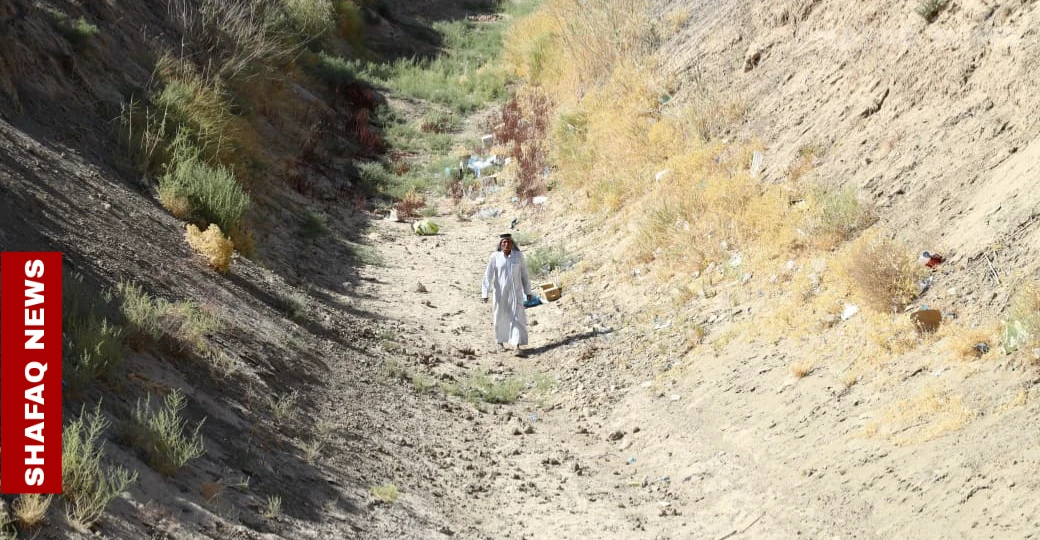
Southern Iraq is facing a growing contradiction: waterlevels in rivers and reservoirs have improved, yet desertification continues toexpand, rural communities are shrinking, and migration to cities isaccelerating.
Although authorities say the current season is “relativelycomfortable” and have broadened agricultural plans, experts told Shafaq Newsthat the country's water challenges remain unresolved.
Water resources expert Tahseen Al-Mousawi said Iraqendured severe shocks over the past four years, culminating in 2025 whenreserves fell below five billion cubic meters before dropping to nearly twobillion. “The recent rains were not a real breakthrough, but temporary relief,”he remarked. “What happened was a natural response from the sky, not the resultof better management or water agreements with neighboring countries.”
Around 70% of the country’s water, Al-Mousawi noted,originates beyond its borders through the Tigris, Euphrates, and theirtributaries, leaving the country vulnerable to upstream policies. Expanding thesummer cultivation plan to around 1.8 million dunams (180,000 hectares),including more than 360,000 dunams (36,000 hectares) of rice, could placeadditional pressure on supplies at a time when actual reserves remain far belowstorage capacity.
: Iraq’s water crisis: A structural rewrite of agricultural governance
Official data show Iraq’s annual water inflows havefallen to between 25 and 40 billion cubic meters, roughly 30–40% belowhistorical averages, while yearly demand exceeds 50 billion cubic meters. Strategic reserves in major dams and lakes currently stand between seven and 10billion cubic meters.
Former parliamentary Agriculture Committee memberZozan Kochar, meanwhile, called the issue “a matter of national security,”cautioning that higher water levels should not distract from long-termchallenges linked to climate change and weak regional coordination.
The United Nations ranks Iraq among the five countriesmost affected by climate extremes, with environmental pressures increasinglyaffecting livelihoods and cultural heritage. Environmental expert Ahmed Salehtold Shafaq News that rainfall and flooding have revived parts of the HawizehMarshes, a UNESCO-listed heritage site, but central areas remain vulnerablebecause of limited inflows.
According to the Green Iraq Observatory, 40.4 milliondunams (4.04M hectares), or 23.2% of land area, are already desertified, whilemore than 96 million dunams (9.6M hectares) remain at risk. Itestimates that the country loses about 100,000 dunams (10,000 hectares) offarmland each year due to salinity and soil degradation, with Dhi Qar, Maysan,Al-Muthanna, and Al-Diwaniyah among the hardest-hit provinces.
In Dhi Qar, Desertification Committee head HaiderSaadi said years of drought have displaced thousands of families, includingaround 10,500 people who remain uprooted. Buffalo herds have suffered heavylosses, while fish stocks and traditional rural livelihoods have also declined.
: Iraq’s Green Belt: The race to forestall desertification