Shafaq News-Baghdad
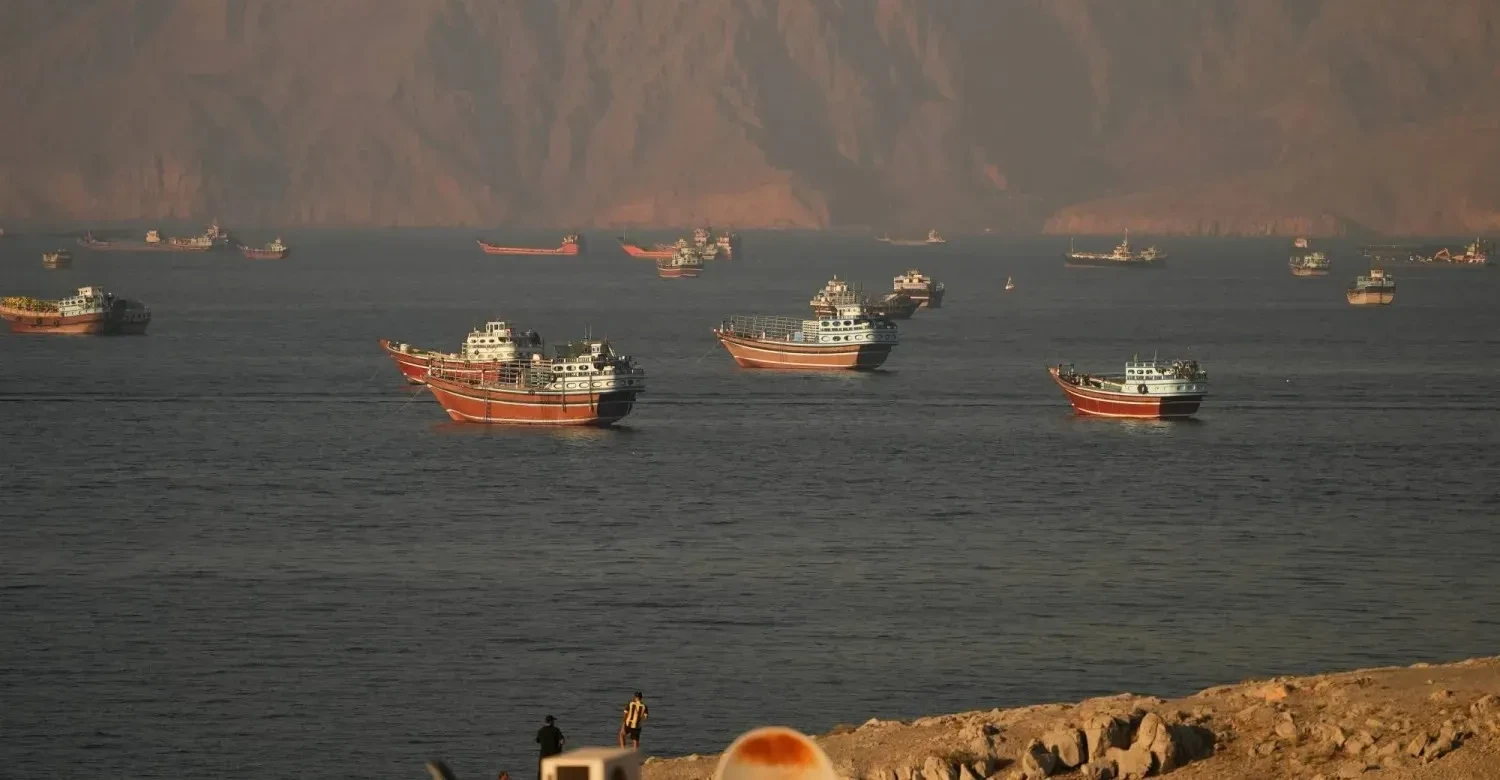
For decades,Iraq's economic model has rested on a simple assumption: the Strait of Hormuzwould remain open. That assumption collapsed on February 28, 2026, when Iranshut the strategic waterway in response to the US-Israeli attacks that killedSupreme Leader Ayatollah Ali Khamenei, exposing the extent to which Iraq's fiscalstability, trade flows, and energy sector remain dependent on a single maritimecorridor.
According toofficial government data, between 96% and 97% of Iraq's crude exports passthrough the Strait of Hormuz, while oil revenues account for roughly 90% of thestate's income. More than 70% of the country's imports, including food,medicine, and industrial goods, arrive through southern Gulf ports.
The closure ofthe strait, therefore, directly challenges the foundations of an economy that,despite repeated warnings over several decades, has yet to develop meaningfulalternatives for either exports or imports.
The scale ofthe impact became apparent within weeks. Oil Minister Basim Mohammed announcedon May 16 that Iraq exported just 10 million barrels of crude in April,compared with a pre-crisis monthly average of approximately 93 million barrels,marking an 89% decline in a single month. According to estimates from the EcoIraq Observatory, Iraq has lost approximately 350 million barrels of exportvolume since the closure began, equivalent to nearly $37.7 billion in foregonerevenue.
: Iraq's rentier economy: Risks and reforms
Economicresearcher Ahmed Eid told Shafaq News that any restrictions on tanker movementsor disruptions to maritime navigation immediately translate into lower exportvolumes and reduced government revenues, placing pressure on public spending,development projects, and essential services.
The financialimpact extends beyond lost exports. Economic expert Safwan Qassi estimatedIraq's daily losses at no less than $30 million, even after accounting foralternative routes, due to rising transportation and insurance costs anddeclining trade efficiency. He noted that more than 70% of the country'simports enter through southern ports, particularly Umm Qasr, leaving supplychains highly exposed to any disruption in Gulf shipping lanes.
Redirectingcargo from Asian markets through Jordan's Aqaba port adds more than two weeksto delivery times while significantly increasing freight costs, insurancepremiums, and logistical risks.
: Iraq's energy vulnerability: When a petro-state has no buffer
The consequencesquickly spread beyond trade balances and government finances. On March 3, Iraqbegan reducing operations at the Rumaila oil field because storage facilitieswere approaching capacity as tankers remained unable to transit the strait. Higher oil prices offered little relief. Although crude prices surged above$120 per barrel following the closure, according to data from the InternationalEnergy Agency (IEA), international energy expert Nawar Al-Saadi told ShafaqNews that Iraq was unable to capitalize on the increase because it lacked thecapacity to move sufficient export volumes. "The rise in prices did notoffset the decline in exports," Al-Saadi said, noting that higher priceshave limited value when production cannot reach international markets.
The Strait ofHormuz crisis exposed Iraq's dependence; the country's largest producing fields—including Rumaila, West Qurna, and Majnoon— remain overwhelmingly reliant onsouthern export terminals linked to the Gulf. While Iraq possesses analternative route through the northern pipeline network to Turkiye's Ceyhanterminal, that corridor accounts for only a fraction of the country's exportcapacity.
For years, theKirkuk-Ceyhan pipeline remained largely inactive because of unresolved disputesbetween Baghdad and Erbil over revenue-sharing mechanisms. An agreement reachedearlier this year enabled the resumption of flows at approximately 200,000barrels per day, representing an important political breakthrough but offeringonly limited relief when compared with the nearly 3.1 million barrels Iraqexported daily before the closure.
Al-Saadi warnedthat the crisis could have lasting consequences for public finances,investment, employment, and monetary stability if export disruptions persist.
According to projectionsby S&P Global, Iraq's real GDP could contract by as much as 15% under aprolonged export shock, while the budget deficit could widen well beyond thegovernment's projected baseline of 7.5%, potentially forcing spending cuts,delaying public-sector salaries, and increasing pressure on the Iraqi dinar.
Despiterepeated warnings dating back to the Iran-Iraq "Tanker War" of the1980s, successive governments have failed to develop alternative export routescapable of reducing Iraq's dependence on Hormuz.
: Energy war nears Iraq: Oil infrastructure faces rising threat
The expertsinterviewed by Shafaq News agree that diversifying export and import corridorsis no longer a long-term ambition but an immediate strategic necessity. Qassiwarned that disruptions linked to the strait could continue depending on theoutcome of ongoing negotiations in Switzerland and broader securitydevelopments across the Gulf.
The Eco IraqObservatory has urged the government to accelerate the proposed "NewLevant" pipeline project, which would connect Basra's southern oil fieldsto Haditha in western Iraq with a planned capacity of up to 2.25 millionbarrels per day, providing an alternative outlet independent of the Gulf.
For Ahmed Eid,however, the challenge extends beyond infrastructure. He argued that reducingIraq's vulnerability will require broader structural reforms, includingmodernizing the banking sector, expanding financial inclusion, strengtheningaccess to credit, and tightening oversight of informal financial networks thatoperate outside the state's regulatory framework.
For decades,every regional crisis has reinforced the need for diversification. Yet astensions subside, reform efforts have repeatedly been deferred, and the closureof Hormuz has demonstrated the cost of that delay.
: Iraq’s oil bottleneck: Abundance trapped by dependency
Written andedited by Shafaq News Agency staff.