Shafaq News-Baghdad
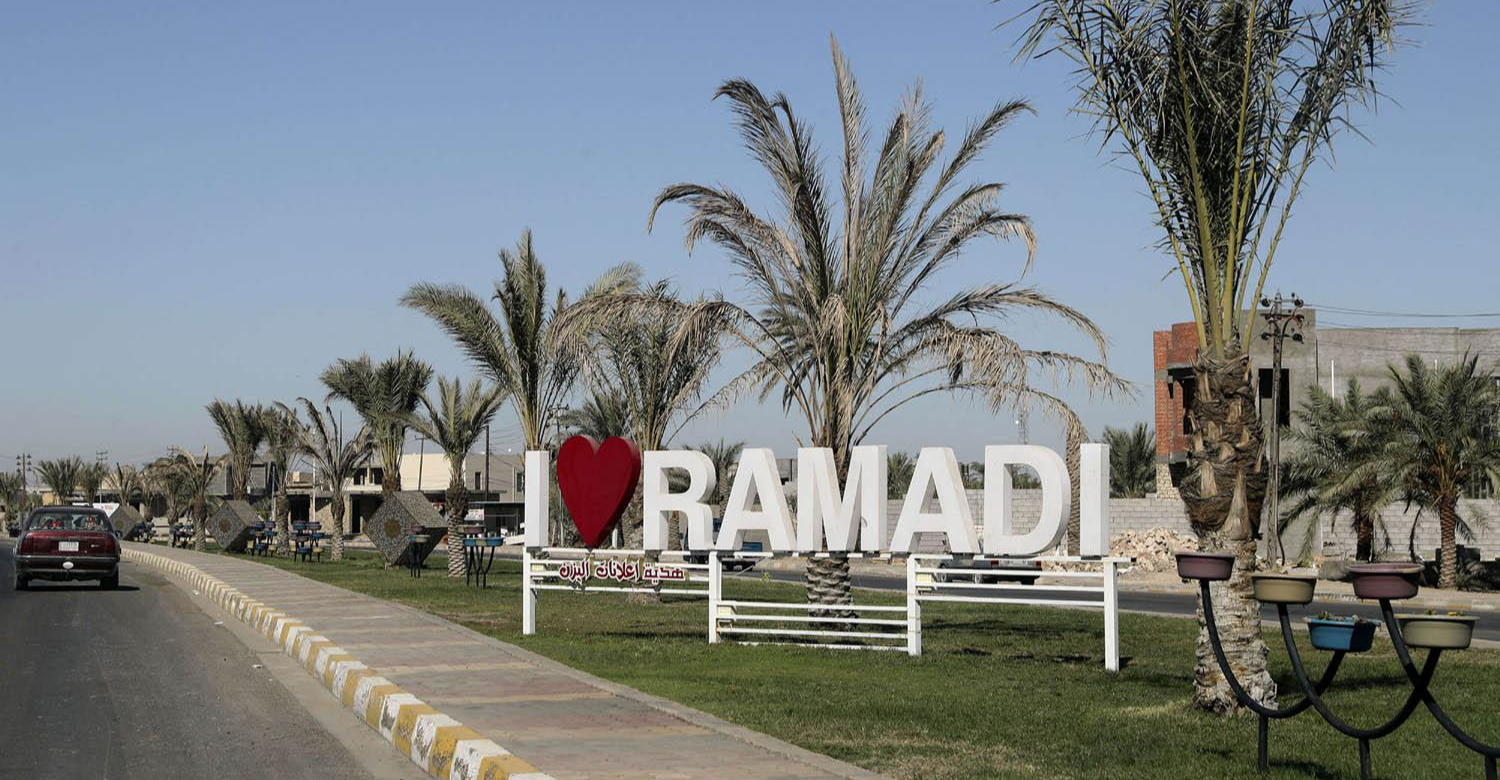
Al-Anbar province,a vast desert expanse in western Iraq that bore the brunt of the country'spost-2003 insurgency and later ISIS’s territorial control, is positioningitself as a frontier for gas investment, with two major energy developmentsconverging this week to signal a shift in its economic fortunes.
Muayadal-Dulaimi, spokesperson for the al-Anbar provincial government, confirmed toShafaq News that Schlumberger, the US-based oilfield services giant, hasresumed operations at the Akaz gas field (Akkas) this week, ending a suspensionforced by military tensions between the United States and Iran earlier thisyear. The company withdrew in March 2025 after foreign firms operating in thefield began a precautionary evacuation amid a volatile security environment, accordingto an al-Anbar provincial council source who spoke to Shafaq News at the time.
Al-Dulaimiconfirmed that there are no security obstacles to investment in the province. The challenges facing projects, he added, are financial and administrative, “rootedin bureaucratic complications from Baghdad's investment authority and thebodies responsible for issuing licenses under the licensing rounds.”
Akaz, anon-associated gas field in western al-Anbar, holds an estimated 5.6 trillioncubic feet of proven reserves and carries a production target of 400 millionstandard cubic feet per day under a long-term development plan. Iraq's Ministryof Oil signed a contract with Schlumberger in July 2025 to acceleratedevelopment of the field, with an initial output goal of 100 million standardcubic feet per day. Gas produced at the site is designated for the al-Anbarpower plant, currently under construction.
: Iraq's investment story: From security to opportunity
New Investment
Runningparallel to Schlumberger's return, al-Dulaimi announced that KAR Group, aprivately held Kurdish energy conglomerate headquartered in Erbil, in IraqiKurdistan, is nearing the launch of the largest gas investment project inAnbar's history.” KAR secured the Al-Khliesiea gas exploration block in Iraq'ssixth licensing round in May 2024, awarded by the Ministry of Oil. The blockspans approximately 8,167 square kilometers, straddling the al-Anbar-Ninevehborder near Iraq's frontier with Syria, and contains one exploratory well thathas returned positive gas indicators.
Al-Dulaimi saidthe provincial government has pledged full facilitation to the executingcompany, citing the project's importance to local employment and economicdevelopment.
Al-Khliesiea isone of ten hydrocarbon blocks distributed across al-Anbar and adjacentprovinces. The broader portfolio includes the al-Anbar, Ana, Al-Anz, NorthRutba, South Rutba, Tubal, Al-Waleed, Al-Qurainan, and Akaz blocks, aconcentration of untapped gas potential that Iraqi officials have longstruggled to attract foreign capital to develop.
: Al-Anbar’s next chapter: Euphrates Resort opens after ISIS era
Bureaucracy isthe Real Barrier
Economicanalyst Ahmed al-Karbouli, speaking to Shafaq News, said the return of majorcompanies such as Schlumberger points to improving business conditions in Iraq,but also exposes structural weaknesses in economic governance. He explainedthat the success of any energy investment depends not only on security andstability but on legislative clarity, decision-making speed, and coordinationbetween local and federal institutions.
Al-Karbouliargued that Iraq holds enormous investment potential in oil and gas, but thatadministrative complexity and licensing delays remain the most significantobstacles to attracting foreign capital. Regulatory ambiguity andjurisdictional conflicts between official bodies, he said, cause companies towithdraw or defer projects.
He called forgenuine reform of the investment framework, including decentralization, aunified approvals window, and greater transparency in licensing rounds, addingthat efficient management of fields such as Akaz could serve as a turning pointfor the Iraqi economy, generating employment, boosting national revenues, andreducing dependence on imported energy.
: Iraq’s western desert from ISIS hideouts to new security challenges
Iraq is theworld's second-worst gas flaring nation after Russia, according to the WorldBank, and has relied on Iranian gas imports since 2017, currently at a volumeof approximately one billion cubic feet per day, to meet domestic powergeneration needs. Baghdad has cast the sixth licensing round explicitly as a mechanismto end that dependence, prioritizing gas supply for power generation and thecountry's industrial, petrochemical, and fertilizer sectors.
No date hasbeen announced for KAR Group's groundbreaking at the Al-Khliesiea block. Schlumberger's resumed operations at Akaz are subject to the developmenttimeline set by the Ministry of Oil contract signed in July 2025.
: Al-Anbar: Iraq’s frontline province after Ain al-Asad military handover