Shafaq News
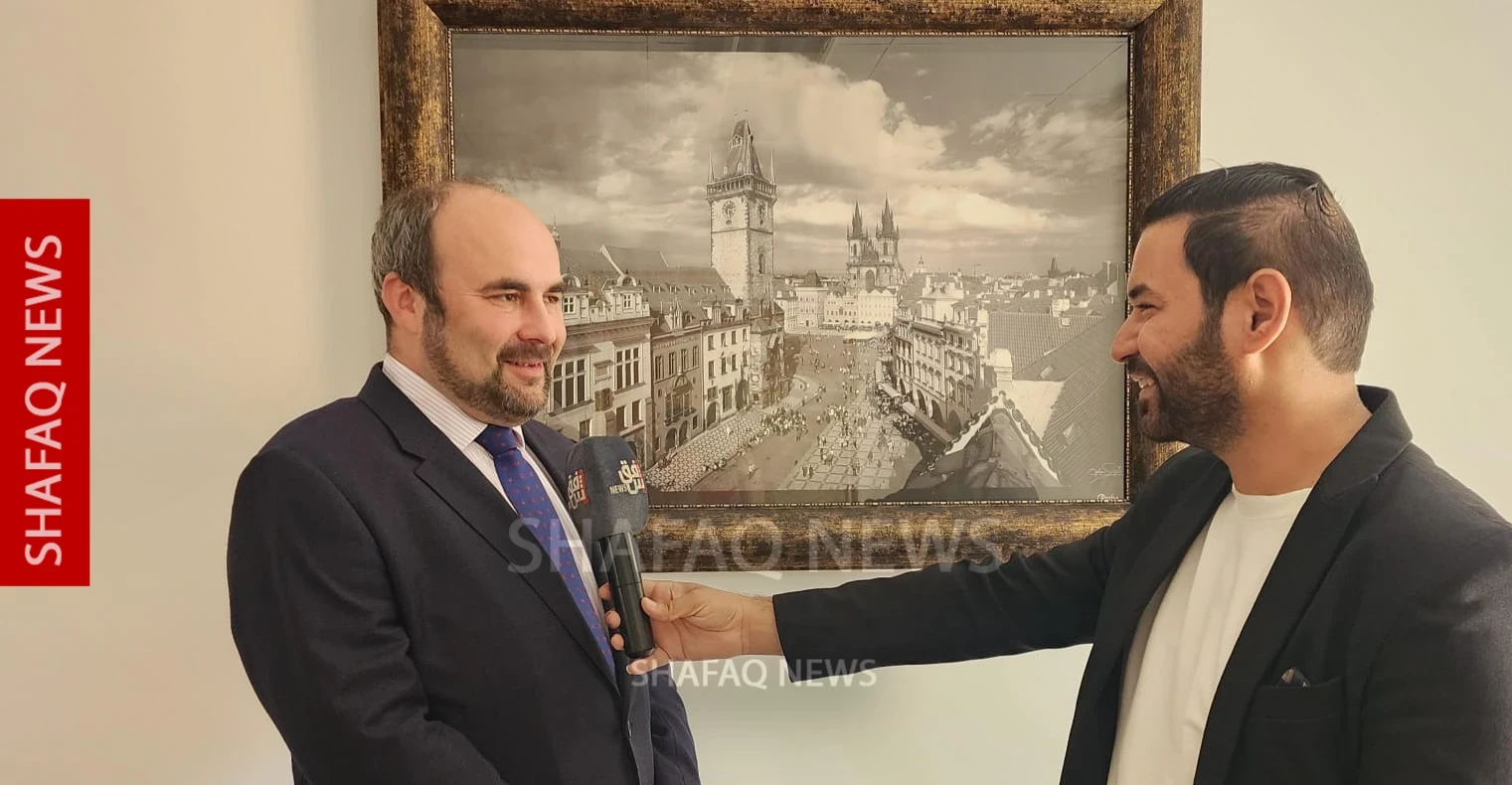
When the Czech Ambassador to Baghdad, Jan Snaidauf, spoke about Iraq, he didn’t begin with oil or trade, but rather with an old weapon that remains etched in the Iraqi memory.
During his years in Iraq, the European diplomat was surprised to find that the name of Brno was still in use among Iraqis, not as a Czech city or company, but as a rifle associated with entire generations of Iraqi soldiers and hunters.
For Snaidauf, this is an evidence of the deep relationship that bound the two countries for decades, a relationship that Prague is now trying to revive through trade, investment, energy, and defense cooperation.
Behind that memory lies a long history of Czech involvement in Iraq. In an interview with Shafaq News, Snaidauf said Czech companies were among the foreign entities that contributed to building and developing Iraqi oil refineries over the past decades. They also participated in water projects, pumping and treatment plants, dam construction, and electricity projects.
The Czech Republic, accord to Snaidauf also supplied Iraq with heavy military transport vehicles, while Czech aircraft manufacturer Aero exported 12 training and combat aircraft to the Iraqi Air Force nearly a decade ago. Discussions are ongoing over maintaining the aircraft and the possibility of exporting a newer generation in the future.
Today, however, economic relations still fall short of the potential of both countries. Snaidauf noted that the volume of Czech exports to Iraq ranges annually between $200 and $300 million, including machinery, industrial equipment, transportation vehicles, foodstuffs, chemical products, and various consumer goods.
“We hope exports will be even higher. We have competitive Czech companies whose prices are suitable for the Iraqi market.”
The other side of the trade balance, however, is almost empty. According to the Ambassador, Iraqi exports to the Czech Republic are “very low, almost zero,” a reality Prague hopes to change in the coming years.
He stressed that the Czech Republic remains interested in Iraqi oil. “This doesn't mean we don't buy Iraqi oil. In 2023, a Czech company purchased millions of dollars' worth of Iraqi oil. However, we still import oil from other sources, and the issue of purchasing Iraqi oil remains under discussion.”
Snaidauf believed this historical experience provides both countries with a solid foundation for expanding economic cooperation in the future, adding, “Trade relations between Iraq and the Czech Republic have a long and rich history.”
The Ambassador, however, does not hide the fact that European investors still view Iraq with caution. While acknowledging that the Iraqi economy has improved in recent years, he emphasized that investors do not base their decisions solely on opportunities. “An investor brings capital, employs workers, and expects to make profits. But at the same time, they are looking for a suitable investment environment and a low level of risk.”
Foreign companies, he added, believe that investing in Iraq requires additional guarantees, clarifying that Baghdad “is required to provide more assurances to investors.”
“Iraq has significant and attractive opportunities for Czech companies and foreign investors, but many still feel uneasy due to some existing conditions, and this is a topic we constantly discuss with Iraqi officials.”
The ambassador believed another important step toward changing investors' perceptions lies in agreements still under negotiation between the two countries. Following a visit by former Iraqi Prime Minister Mohammed Shia Al-Sudani to Prague, the two sides signed several MoUs covering civil aviation transport and cooperation between the ministries of Interior, Energy, Oil, and Environment.
However, the two agreements most anticipated by investors concern the avoidance of double taxation and the protection of investments.
Snaidauf said negotiations on both agreements went through two rounds last year, noting that discussions with the Iraqi side were “positive and intensive.” He expressed hope that the agreements would be finalized and signed later this year.
The Czech Republic has also donated healthcare equipment to a dozen Iraqi hospitals over the past two decades, helping them provide effective and high-quality treatment to patients. According to Snaidauf, these contributions have laid the groundwork for broader cooperation in the healthcare sector in the years ahead.