Shafaq News
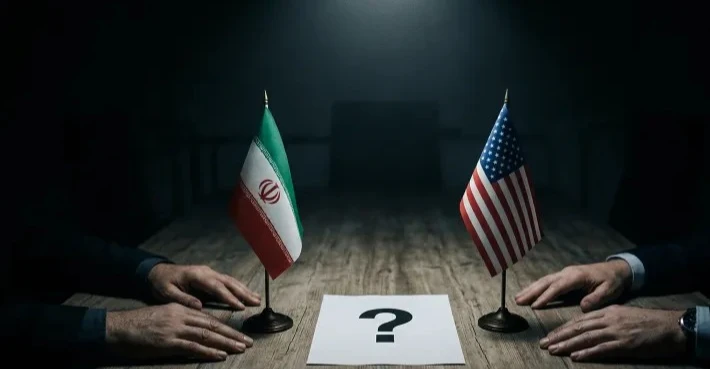
Political actors in Baghdad and across the region areracing to assess the potential implications of the recently announced US-Iranunderstanding, but the outlook in Baghdad remains mixed, balancing hopes ofbenefiting from a possible easing of tensions against caution over whether theagreement will endure or face challenges at the first regional test.
The uncertainty is compounded by Iraq’s own complexpolitical, security, and economic landscape. The country remains deeplyaffected by shifts in relations between Washington and Tehran, as overlapping regional and international interests shape its stability,power dynamics, energy sector, and trade routes.
: Iran and Israel exchange of missiles: What was achieved in the latest confrontation?
According to preliminary announcements, the US-Iranagreement, brokered by Pakistan, includes a halt to military operations acrossthe region, including in Lebanon, the reopening of the Strait of Hormuz tointernational shipping, the lifting of Iran’s maritime blockade, and the launchof nuclear negotiations within 60 days.
Although implementation details remain incomplete, theannouncement has already begun shaping market expectations and regionalcalculations, signaling that its impact is likely to extend beyond Washingtonand Tehran to countries such as Iraq.
Imad Al-Musafir, a political analyst close to Iraq’sCoordination Framework, a coalition of mainly Shiite political parties, saidany escalation or stability in the region directly affects Iraq because of itsextensive political and economic ties with neighboring countries.
“The Iraqi political decision-maker needs a clear visionregarding developments in the region,”Al-Musafir told Shafaq News, adding that Iraq must employ it in a waythat serves its interests without compromising national principles andconstants.
In an interview with Shafaq News, Ihsan Al-Shammari,professor of strategic and international studies at the University of Baghdadand head of the Political Thinking Center, noted that Iraq could be among thecountries that benefit most from an end to hostilities between Washington andTehran.
Al-Shammari emphasized that Iraq had suffered significantlyfrom the military confrontation and its political, diplomatic, and economicconsequences. The agreement, he argued, represents an opportunity for PrimeMinister Ali Al-Zaidi’s government to reorganize priorities, particularly onthe political level, through a roadmap for state reform, institutionaldevelopment, and a national project.
Economically, Al-Shammari noted that previous tensions,particularly those involving the Strait of Hormuz, affected Iraq’s oilrevenues. However, he observed that Iraq should take broader advantage of thecurrent easing of tensions by diversifying export routes through Saudi Arabia,Jordan, Syria, and Turkiye.
“Such measures could enable Iraq to export an additional1.4 million to 1.5 million barrels of oil per day. The issue is not only aboutincreasing revenues but also restructuring the economy in response to thelessons of the recent conflict.”
: Iraq to place armed factions' weapons under state control: What we know so far
On the security front, Al-Shammari said the agreement couldstrengthen efforts to place all weapons under state control. “There is nojustification for the existence of weapons outside the state framework,” heindicated, suggesting that the government may be encouraged to address theissue of armed factions within broader understandings involving Tehran.
Al-Shammari also explained that Iraq should move “beyondtraditional approaches” if it wants to maximize the benefits of the agreementand rebuild relations with both the United States and Gulf countries.
Despite the positive atmosphere surrounding theannouncement, Haitham Numaan, a professor of political science at theUniversity of Exeter in the United Kingdom, urged caution in assessing itsimplications. He told Shafaq News that it remains unclear how durable theagreement will be or whether it can be transformed into a lasting reality,adding that “the agreement remains fragile and lacks clarity.”
Al-Heeti pointed out that it is too early to draw firmconclusions about its impact on Iraq, whether positive or negative, clarifyingthat the next phase will be shaped not only by US-Iran relations, “but also bythe American role inside Iraq and the response of Iraqi political forces tothese changes amid ongoing economic pressures.”
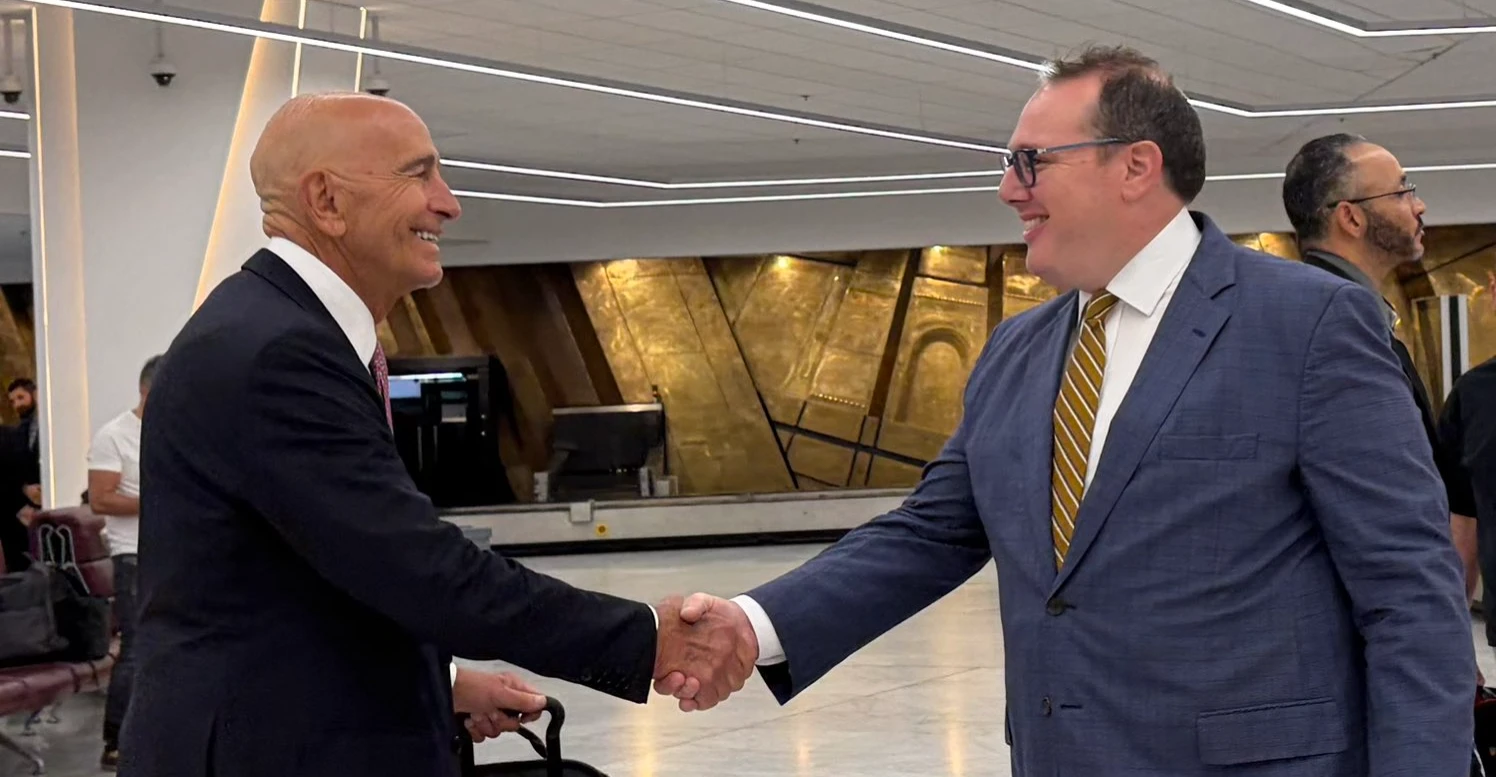
The US agenda overseen by the US Presidential Envoy toSyria and Iraq, Tom Barrack, could prove more influential than the broaderUS-Iran relationship, with future developments depending largely onWashington’s policies and Barrack’s plans.
Political writer and analyst Ali Al-Baydar assessed thatthe agreement could provide Iraq with an opportunity that may evolve into alasting advantage if managed effectively, and Baghdad could be among theregional countries most positively affected by the agreement because of itsgeopolitical position and its relations with all parties involved.
: Trump's new Iraq-Syria envoy faces an Iran test Syria never posed
He estimated that developments since October 7, 2023, hadsubjected Iraq to simultaneous pressure from both the United States and Iran,creating political uncertainty and competing loyalties. “Any reduction intensions could help ease domestic polarization and political divisions.”
Economically, the political analyst expected greaterstability to improve the investment climate and strengthen confidence in Iraq’seconomy. From a security perspective, he predicted that the agreement couldreduce reciprocal attacks and limit the use of Iraqi territory as an arena forregional confrontation, “allowing security forces to focus more on prioritiessuch as counterterrorism.”