World Cup 2026: For Iran, politics and football collide again
Submitted by
John Duerden
on
Sun, 06/14/2026 - 23:40
Iran's World Cup history has often reflected the country's political turmoil. But as Team Melli begin their campaign the players face unprecedented pressures
Iran's players celebrate after Ramin Rezaeian scored their side's second goal during a friendly against Gambia, in Antalya, southern Turkey on 29 May 2026 (Oner San/AFP)
Off
Iran's World Cup history has long mirrored the country's upheavals, but the 2026 tournament is on a different level.
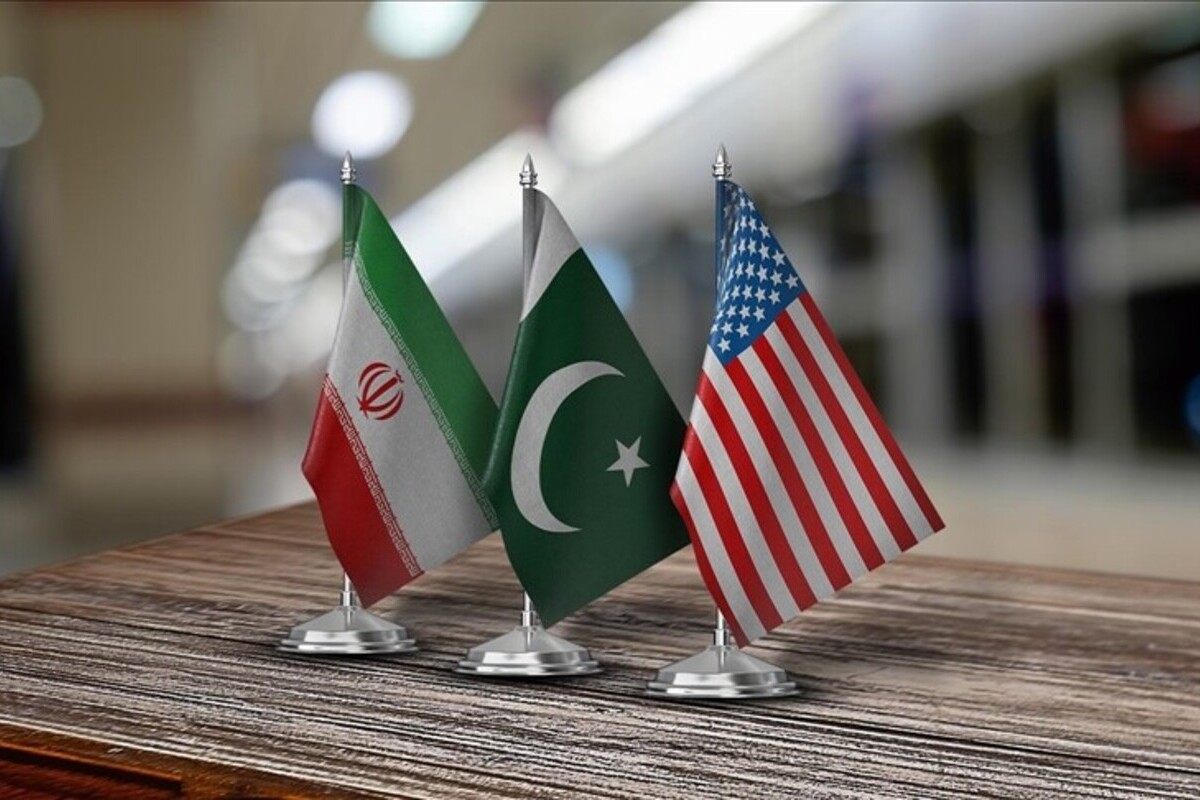
Team Melli's opener against New Zealand comes just a day after US President Donald Trump said he had reached a deal with the Iranian government, signaling a potential end to the three-and-a-half month conflict.
The cheetah's will also play their first game in Los Angeles, the Californian city nicknamed "Tehrangeles" and home to a largely anti-Iranian government diaspora.
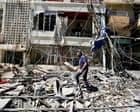
Back in the Middle East, support for the national team, seen by some as representing the government more than the people, is also debatable, especially after the government reportedly killed thousands earlier this year who had taken to the streets in protest.
It's safe to say, then, that this is an unprecedented situation for any team, and the 11 men on the pitch are caught in the middle.
"The players feel the pressure from all sides – the politicians, the fans in the US and at home," Jahanyar Mohebbi, former coach of Foolad FC, a club in Iran's professional league, told Middle East Eye.
"But there is a long history of politics mixing with football in Iran."
When Iran made their first first World Cup appearance in 1978, revolution was brewing back home.
As the team travelled to Argentina, the old regime headed by the Shah tried to keep the team clear of the unrest.
Parviz Ghleechkhani, who died just last month, was the country's best player but, because of his outspoken political views, was questioned by the Shah's secret police and ultimately did not go to the tournament.
Goalkeeper Nasser Hejazi did go and impressed so much that English giants Manchester United reportedly wanted to sign him, but because of the revolution, the paperwork never materialised.
Pressure is not new
The new Islamic Republic, led by Ayatollah Ali Khomeini, was wary of football and its ability to generate passion, anger and excitement in a nation of 90 million.
But when the team travelled to Australia in 1997 to win a playoff and qualify for the World Cup the following year, celebrations at home were so extensive that the players were told to delay their return to allow the streets to settle.
That famous victory in Melbourne secured a second appearance on the global stage and set up what was arguably the most eagerly anticipated game of the 1998 World Cup: Iran against the United States in Lyon.
US President Bill Clinton recorded a message of peace, and the Iranian players handed flowers to their American counterparts before winning 2-1.
"People started talking about this game six months before the World Cup," Iran's then coach, Jalal Talebi, told ESPN.
World Cup 1998: When Iran played the US in 'the mother of all games'
»
"Every day somebody from the government, from sports people, they're asking and they want to win this game. It doesn't even need me to come to the players and talk about the importance of this game. What I try to tell the players is, 'Forget that. What they said is political.' I know how much pressure they have for this game."
Iran won but failed to record a victory in 2006, when the controversy was, at least, more of a traditional football one, with reported divisions in the dressing room between supporters of Ali Daei and Ali Karimi.
The latter was one of several players who wore a green armband during a crucial qualifier for the 2010 World Cup in South Korea.
The gesture was widely seen as support for demonstrators backing Mir-Hossein Mousavi, the opposition candidate in the presidential election. Mousavi was defeated by incumbent Mahmoud Ahmadinejad, though many believed the vote had been rigged.
Protests were also a defining theme of the 2022 World Cup, when Iran faced England, the US and Wales. The death in custody of Mahsa Amini, a 22-year-old woman detained for allegedly violating laws on head coverings, provoked widespread anger.
Before the game against England, Iran’s players did not sing the national anthem, an act widely interpreted as a protest against the government.
The government's isolation has also held back Iranian football.
On a practical level, the federation often struggles to collect prize money and funds owed from overseas. There has been underinvestment in the national team in terms of training camps and facilities. The domestic league has fallen behind others in the region, and leading international teams are often reluctant to arrange friendly matches.
Iran were the second team to qualify for the 2026 World Cup but have since warmed up against Russia, Tanzania, Costa Rica, Nigeria and Gambia. Japan were the first to qualify and have prepared with games against Brazil, England, the US and Mexico.
Into the lion's den
Yet despite all the obstacles, Iran consistently reach the World Cup and remain Asia's second-highest-ranked team behind Japan. This is their toughest test yet, however.
As well as the pressures at home and abroad, there was, until Sunday, uncertainty over whether the team would be allowed into the US to play its matches.
The team's training camp had already been moved from Arizona to the Mexican border city of Tijuana.
"Iran had some advantages," Mohebbi said. "Usually national teams come really tired to the tournament after long domestic seasons, but Iran have had a long break and have been training almost like a club."
There are disadvantages, however, with the domestic league having been cancelled in February.
World Cup 2026: Iranians fear US visa restrictions will shut them out
»
"There haven’t been games, but the most challenging thing is the logistics," Mohebbi said. "Will they be able to train at the stadium a day in advance or just go to the game? That uncertainty makes it harder."
Iran captain Mehdi Taremi echoed those concerns after some members of the Iranian delegation were denied visas by the US.
"I've been to three World Cups and they always say once you get off the plane and you enter the host country, there's just a unique atmosphere of friendliness and globalness," Taremi told ESPN.
"Unfortunately, I'm not feeling it right now. There's a lot of tension right now in this World Cup. You feel it in the atmosphere and, unfortunately, it's because of actions like [visa denials]."
"Obviously some people outside Iran, in the war, maybe they are against the government, but we are all Iranian," he said. "We are united and we are looking for peace. I think they will come there to support us and we have to make them happy and bring them joy," he added.
As well as the situation in the US, the players are also concerned about what is happening back home.
"It's been very difficult, I'll be honest with you, for every single one of us with the whole situation," winger Alireza Jahanbakhsh said.
"You have to keep checking on your family, on your loved ones, on your people back home and, of course, it's affecting the group."
World Cup 2026
For Iran, politics and football collide again at the World Cup
News
Post Date Override
0
Update Date
Mon, 05/04/2020 - 21:19
Update Date Override
0