Iranian strikes surprise Israel and raise concern of strategic setback
Submitted by
Nadav Rapaport
on
Mon, 06/08/2026 - 14:01
Politicians and analysts respond to renewed hostilities with calls for strong action and concerns over American influence
Hospital staff move a baby in an incubator to an underground facility for safety in Tel Aviv on 8 June 2026, after sirens sounded following Iranian attacks (Ilia Yefimovich/AFP)
Off
The escalation between Iran and Israel has sparked mixed reactions from politicians and journalists across Israel.
Some have criticised Prime Minister Benjamin Netanyahu's policies while advocating for further military action against Iran, whereas others condemn the renewed hostilities, warning of potential consequences.
Sunday night’s Iranian attack caught many in Israel by surprise. Channel 13 News military correspondent Alon Ben David reported that Israel estimated the Iranians “would not dare fire" toward Israel following the Israeli-US war on Iran.
This escalation follows an Israeli military strike earlier on Sunday against a building in southern Beirut, which Iran condemned as a breach of the ceasefire agreement. The attack, described by Ben David as "barely symbolic," left two Lebanese citizens dead.
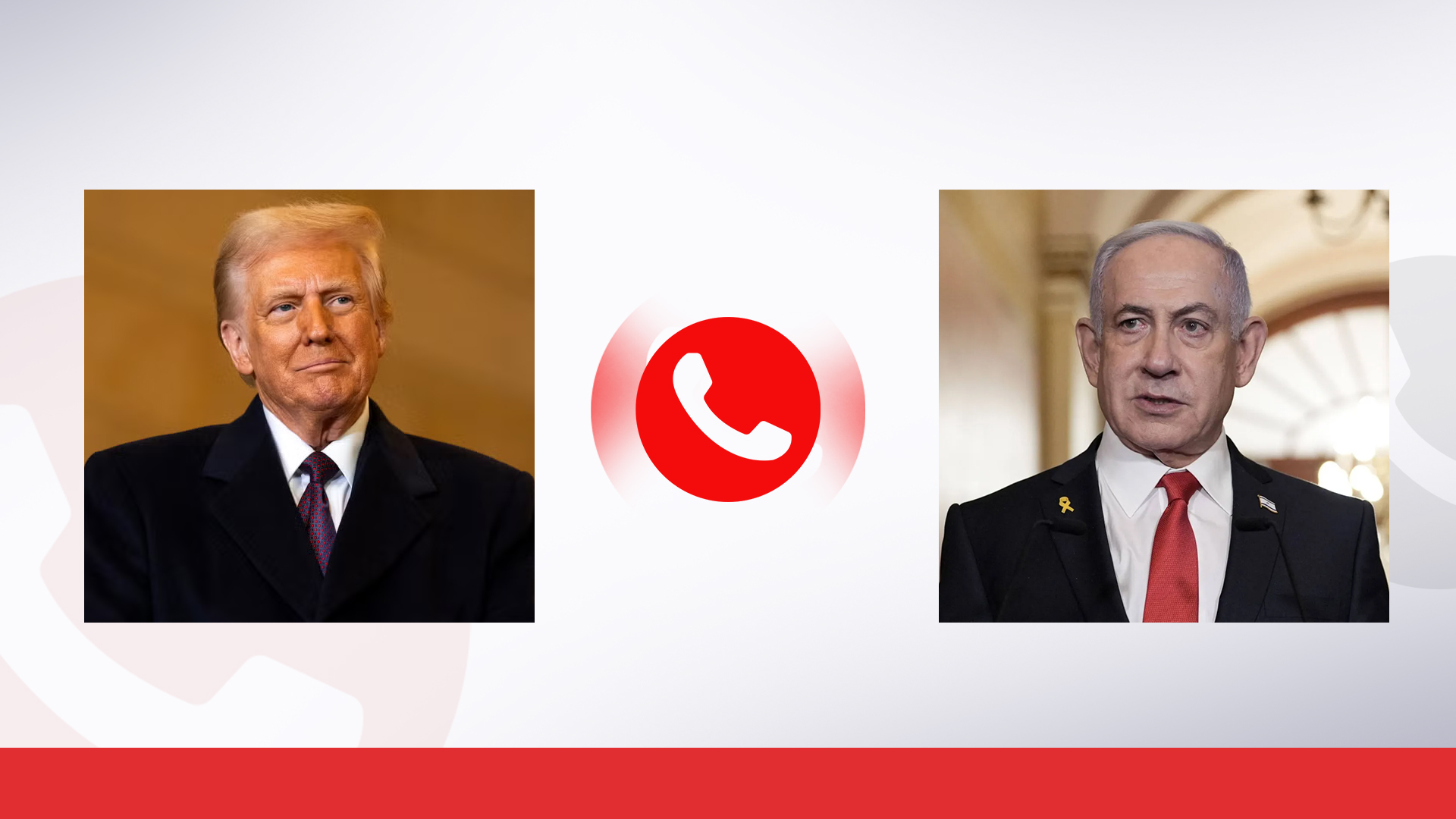
While media coverage extensively discussed the Iranian attacks and Israel’s response, significant focus was on US President Donald Trump’s comments urging Netanyahu not to attack Iran. Some Israeli commentators criticised Netanyahu for allegedly ceding national security decisions to foreign leaders.
Veteran Israeli journalist Ben Caspit in Ma'ariv complained that national security in Israel had been "privatised" and handed over to Trump to the extend that military decisions needed approval from Washington.
His colleague, Avi Ashkenazi, said that "Israel must not accept the American dictate to sit still and refrain from responding," adding that it could risk the very existence of Israel.
Israel carried out air strikes in Tehran and other cities hours after the Iranian rocket attacks.
Exchanges of fire continued on Monday as Trump publicly urged the two sides to “stop shooting immediately”.
Despite criticism of Trump’s influence, other analysts viewed the recent events as evidence of the failure of the joint Israeli-US war on Iran earlier this year.
Israeli Iranian affairs expert Danny Citrinowicz from the Institute for National Security Studies (INSS) said the escalation "illustrates just how much the recent campaign against Iran was a resounding strategic failure".
In a post on his X account, Citrinowicz said that Israel is now facing a fateful dilemma: "to respond and risk a direct confrontation with the US President, or to refrain from doing so," and risk restriction on the Israeli assault in Lebanon.
After the Israeli-US war failed to topple the Iranian government, Citrinowicz said that "Israel finds itself with less freedom of action, Iran with greater self-confidence, and the US with a growing desire to resolve the crisis through a diplomatic settlement".
Haaretz military affairs analyst Amos Harel said that Netanyahu "continuously pushed for a resumption of the war" with Iran after the April ceasefire, adding that last night's escalation symbolises the growing rift between the Israeli prime minister and Trump.
'Tehran must burn'
Meanwhile, Israeli authorities declared several emergency measures, with classes and public events cancelled, public transportation and hospitals working at a limited capacity, and the military demanding to limit the number of arrivals at Ben Gurion Airport.
While Netanyahu has so far refrained from commenting on the recent escalation, ministers called for bombing Iran.
According to Amit Segal, a Channel 12 News senior journalist, Finance Minister Bezalel Smotrich was expected to demand in a cabinet meeting on Monday to “level” dozens of buildings in southern Beirut’s suburbs for every Iranian missile fired at Israel.
Israel's National Security Minister Itamar Ben Gvir said: "Tehran must burn."
Culture Minister Miki Zohar urged Netanyahu to continue strikes in Iran, adding that "in the Middle East, they understand only strength and power".
Trump calls on Iran and Israel to ‘stop shooting immediately'
»
Support for the Israeli attacks on Iran also came from opposition figures like former prime minister Naftali Bennett, who wrote on X that "this is a moment of truth: is Israel a sovereign state capable of defending itself," adding that "Israel must act with strength and effectiveness."
"We must respond immediately and strike Iran’s strategic infrastructure," said Avigdor Lieberman, leader of the right-wing opposition Israel Beitenu party.
Former army chief Benny Gantz said that it was a mistake to stop the fighting in Lebanon as part of the ceasefire with Iran, and that this “strategic mistake” must be corrected through a forceful response in Iran.
Meanwhile, the Israeli military was reportedly mobilising reservists, with Channel 12 indicating preparations for a days-long conflict. The army’s leadership views the current escalation as a continuation of the Israeli-US effort against Iran, considering it an opportunity to strike the Iranian state.
However, other opposition figures did not welcome the return of fighting.
"Our enemies recognise what everyone can see: Netanyahu is weak,” Yair Golan, leader of the Democrats party, wrote on X, adding that the government "has no mandate to drag Israel into another war".
"Netanyahu led the escalation in Lebanon to set the region ablaze and avoid elections," Golan said.
Gilad Kariv, lawmaker for the Democrats, said on X that "Netanyahu failed to protect the citizens of Israel and the state," adding that "the current government is endangering the security of every Israeli man and woman."
War on Iran
Tel Aviv, Israel
News
Post Date Override
0
Update Date
Mon, 05/04/2020 - 21:19
Update Date Override
0