Shafaq News-Baghdad
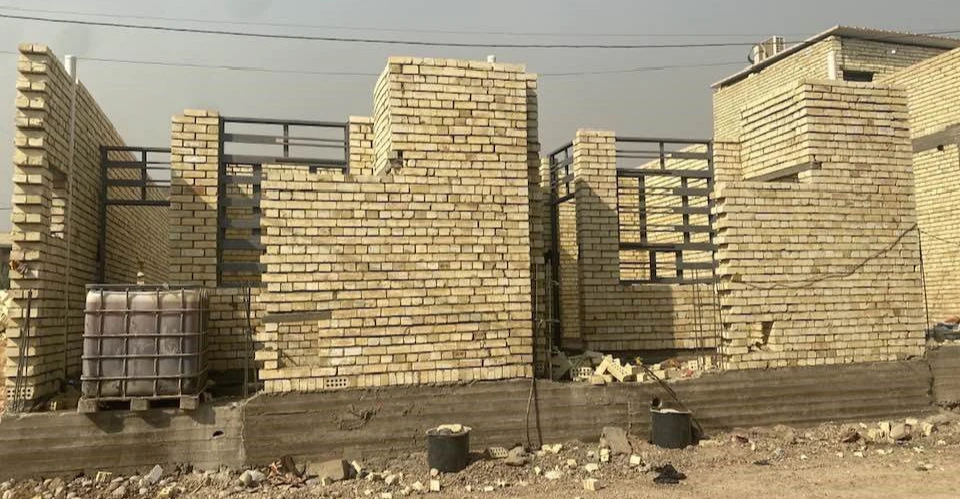
Private sectorbuilding and renovation permits in Iraq dropped to 25,934 in 2025, an 11.4%decline from 29,729 issued the previous year, according to data releasedTuesday by the Commission of Statistics and GIS.
The figureextends a sustained contraction that began after the sector peaked in 2022 at37,442 permits, following a recovery from a historic low of 17,665 recorded in2020. Permits eased to 34,373 in 2023 and 29,279 in 2024 before decliningfurther last year.
Baghdad led allprovinces in new residential construction permits, accounting for 17.5% of thenational total. Basra followed at 12% and Karbala at 9%. Al-Anbar, Babil, andWasit each recorded 7%, while Diyala, Dhi Qar, Al-Diwaniyah (Al-Qadisiyyah),and Najaf each held 6%. Al-Muthanna registered 5%, Kirkuk and Maysan 4% each,and Nineveh 3%. Saladin posted the lowest share nationally, at 1%.
The Iraqi Ministryof Construction and Housing, Municipalities and Public Works, revealed earlierthat the country aims to reduce its housing shortage by at least 50% by 2030,relying on partnerships with private developers to accelerate construction atscale.
Iraq's firstnational census in nearly four decades, conducted in November 2024, recorded46.1 million residents across more than eight million households, with anannual population growth rate of approximately 2.6%. Iraq needs to add at least250,000 housing units per year to keep pace with demand.
Despitelegislative frameworks intended to address the crisis, practical implementationhas drawn criticism, with the Iraqi Business Council noting that residentialinvestment projects have increasingly catered to wealthy buyers rather thanlow- and middle-income groups.