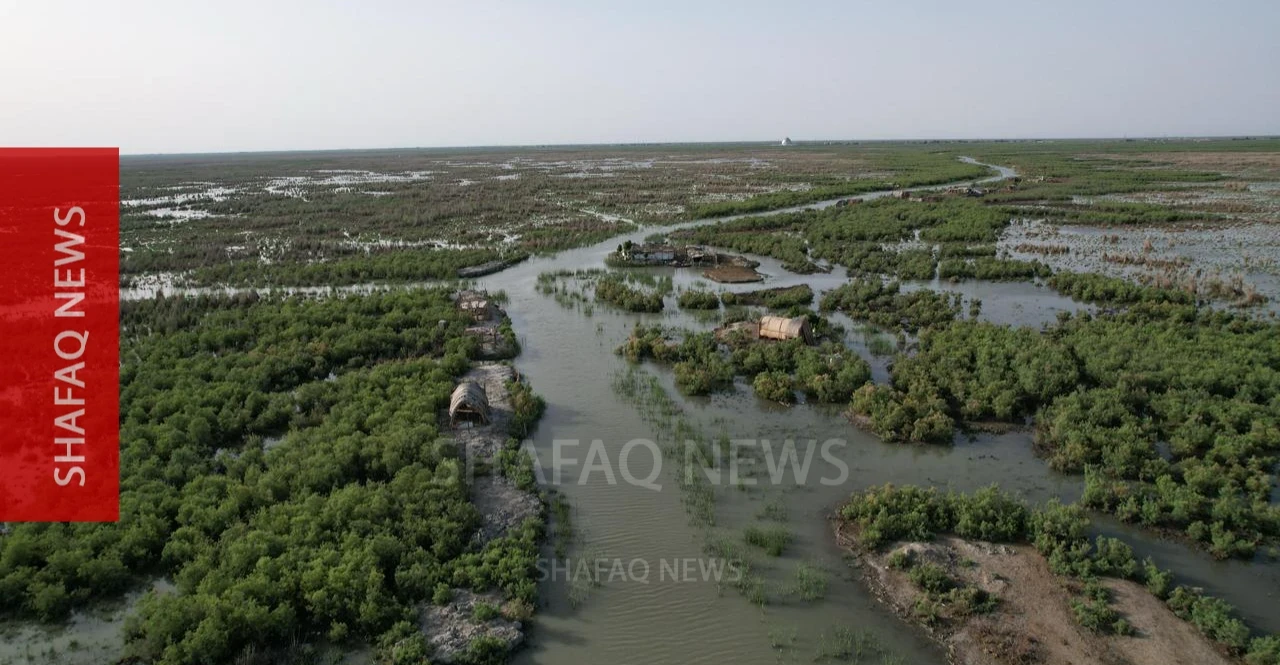
Water levels are rising again in Iraq’s southern marshlands, bringingcautious optimism to communities that feared another summer of cracked earth,dying buffalo, and disappearing livelihoods, an Iraqi official told Shafaq Newson Thursday.
Raad Al-Asadi, director of the Chibayish Organization for Tourism andEnvironment, described the current water situation as “relatively good”compared with previous years, when drought levels exceeded 90% across largeparts of the marshlands.
“Most buffalo breeders left their areas, while fishermen and many marshresidents lost their sources of income,” he explained, noting that recent waterreleases and rainfall have once again flooded sections of the marshes, withlarger areas expected to be submerged in the coming weeks.
Heavy winter rainfall and renewed water releases into the marshes of DhiQar and Maysan provinces have partially restored flooded areas. Al-Asadi saidthe return of water has also improved morale among marsh communities afteryears of severe drought.
“This year differs from previous seasons because flooding arrived laterand may continue until early June,” he added, cautioning that continued waterreleases could ease drought conditions during the summer months.
Meanwhile, marshlands activist Murtadha Al-Janoubi observed improvingconditions across several wetlands near Amarah, including Hawizeh, Al-Arouqa,Al-Sanaf, and Al-Battat marshes.
“Drought had reached 100%, but recent rainfall, floods, and waterreleases toward the marshes improved the situation,” he told Shafaq News,estimating water depths in some areas at between half a meter and one meter,though still below ideal levels.
Warning that sustained water releases remain critical to the survival ofthe marshlands, he stressed that any interruption could push the region backinto the severe drought conditions witnessed in recent years.
Iraq has faced worsening drought in recent years due to climate change,declining rainfall, and reduced water flows from upstream countries, includingTurkiye and Iran. The crisis has cut farmland, accelerated desertification, andundermined food security, particularly in rural areas. At the same time, waterlevels in dams and reservoirs have dropped below safe thresholds, prompting theMinistry of Water Resources to prioritize supplies for drinking water andlimited horticulture amid the absence of a comprehensive summer agriculturalplan.
: Iraq’s water crisis: A structural rewrite of agricultural governance