
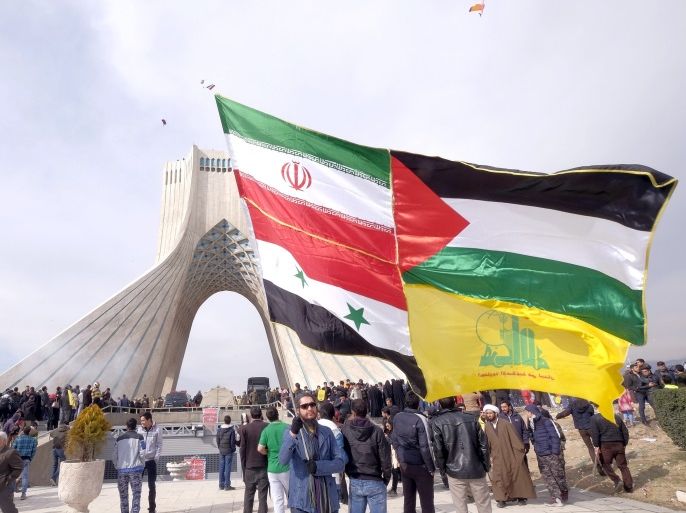
Middle East (hathalyoum.net)- Political and strategic analysts say the Middle East has entered a phase of preparation for a potential large-scale military confrontation led by the United States and Israel, aimed at dismantling what is known as the “Axis of Resistance.”
The strategy, according to analysts, combines pressure on multiple fronts, including heightened military activity in the Horn of Africa, direct threats along the Lebanese border, and intensified pressure on Iran amid signs of internal instability.
Diplomatic sources said several regional states, including Qatar, Egypt, and Turkey, have conveyed a message from Israel to Lebanon’s Hezbollah, describing it as a “last opportunity” to avoid a wider conflict.
According to an Arab diplomatic source, the message presented Hezbollah with two options: handing over its weapons to the Lebanese state or facing a large-scale military operation involving Israel, with support from the United States and Britain.
The developments come as Lebanon continues to struggle with a severe economic crisis, raising concerns that any military escalation could push the country into a critical and potentially destabilizing phase.
In parallel, Iran has witnessed protests and clashes in several cities, reflecting internal tensions that analysts say intersect with external pressure aimed at weakening Tehran’s regional influence.
Analysts believe these internal developments coincide with what they describe as U.S. approval for Israel to target Iran’s ballistic missile and nuclear programs, suggesting a broader strategy intended to undermine Iran’s military and political capabilities.
Iranian officials have warned that any direct military attack would be met with a strong response. Previous exchanges between Iran and Israel reportedly included missile strikes over a two-week period, referred to by U.S. President Donald Trump as the “12-day war.”
On another front, reports indicate that an air base in Berbera, Somaliland, funded by the United Arab Emirates, has been completed and could be used to support Israeli operations targeting Iranian interests, as well as addressing Houthi threats in the Red Sea.
Meanwhile, tensions between Saudi Arabia and the UAE in Yemen have reportedly limited further regional escalation. Saudi air strikes reportedly targeted Emirati ships in the port of Mukalla, allegedly carrying weapons to the Southern Transitional Council, leading to what sources described as the UAE’s withdrawal from active operations in Yemen.
Analysts have ruled out a direct link between the Saudi-Emirati tensions and developments in Somaliland but say the overall regional picture points to increasing coordination among U.S. and Israeli allies.
Political analyst Hamad Al-Maliki said the region is witnessing unprecedented military and political alignment, noting that Israel appears to be seeking a comprehensive campaign rather than limited strikes.
Another Arab analyst said regional messages to Hezbollah should be viewed as warnings rather than mediation efforts, adding that growing U.S.-Israeli consensus on confronting Iran suggests that escalation could occur in the near term.